Throttle Buff is reader-supported: we may earn a commission when you buy through links on this page. Read our affiliate disclosure.
How we reviewed it: this review is research-based, built from manufacturer specifications, safety certifications and owner feedback rather than a long-term test. How we research.
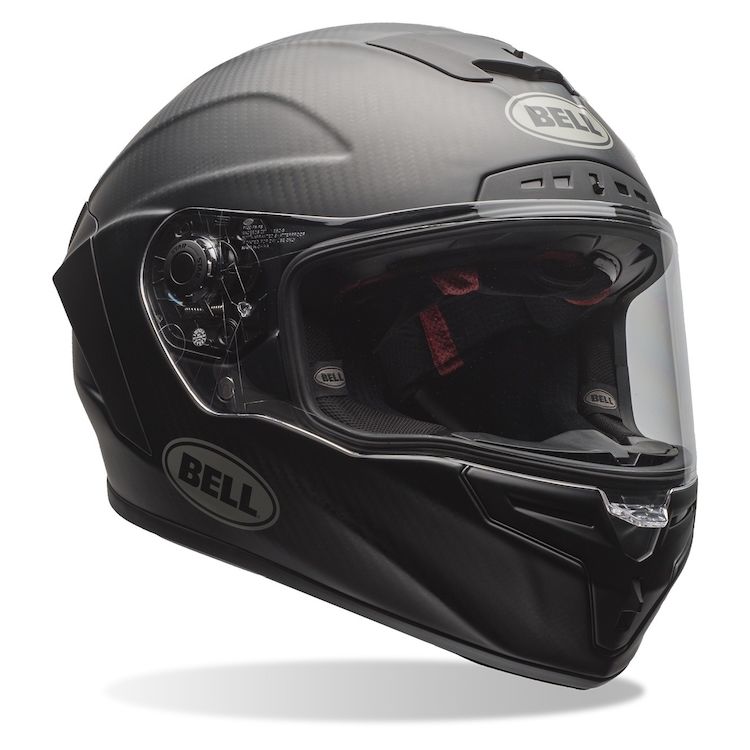
The Bell Race Star Flex DLX is Bell’s top street and track-day helmet, sitting just below the race-only Pro Star. It combines a carbon fiber shell, Bell’s Flex multi-layer impact liner and a Panovision shield with a ProTint photochromic shield included in the box. In 2026 it’s still current in the US, priced from about $630 to $1,000 depending on graphic. This review covers its construction, safety, fit, ventilation and shield system, what owners like and dislike, and how it compares with rivals. It’s based on Bell’s specifications, retailer listings and published reviews, not our own testing.
Bell Race Star Flex DLX at a glance
| Shell | 3K carbon fiber |
| Impact liner | Flex three-layer energy management |
| Shell / EPS sizes | 5 shells, 6 EPS sizes (XS–XXL) |
| Weight | About 1,540 g (3.4 lb) in size M |
| Certification | DOT and Snell (US); ECE 22.06 (EU/UK version) |
| Shield | Panovision RaceView, ProTint photochromic included |
| Liner | Magnefusion magnetic cheek pads, Ionic+ antimicrobial padding, Virus Cool Jade fabric |
| Extras | Speaker pockets, helmet bag |
| Price (Nov 2026) | About $630–$1,000 (Bell US); around $950 for solids at RevZilla |
Is the Race Star Flex DLX still available?
Yes. It’s still sold in the US through Bell and RevZilla, though some graphics are sold out and Bell UK has cut its price significantly, which can be a sign a model is late in its cycle. We found no announced successor; the race-focused Bell Pro Star sits above it.
Shell and safety
The Race Star Flex DLX uses a 3K carbon fiber shell, which keeps weight down to about 1,540 grams in medium, roughly 10% lighter than the earlier Race Star according to Bell. Inside is Bell’s Flex liner, which uses three layers of energy-absorbing material designed to manage low-, mid- and high-speed impacts, along with rotational forces. Five shell sizes and six EPS sizes keep the helmet compact for every head size.
In the US it’s certified to DOT and Snell, which matters if you ride track days with organizations that require Snell. The European version carries ECE 22.06. Read our guide to helmet safety ratings for more.
Panovision shield and ProTint
Bell’s Panovision RaceView shield gives an exceptionally wide field of view, especially upward in a tucked riding position, and it’s one of the helmet’s most praised features. A ProTint photochromic shield comes in the box, darkening automatically in sunlight and clearing in low light. Replacement shields cost about $150 for ProTint and $80 for a standard Panovision shield.
The ProTint has critics: some riders find it too dark in rain or tunnels and too slow to clear when light changes quickly. It can’t take a Pinlock insert, and the shield has only three detent positions. For fog-prone conditions, see our tips on stopping visor fogging.
Comfort and fit
The interior uses Bell’s Magnefusion magnetic cheek pads, which pop out easily for cleaning, plus Ionic+ antimicrobial padding and a Virus Cool Jade liner designed to feel cool against the skin. Owners often find the cheek pads tight at first, which is normal for a race-fit helmet, and they bed in with use. Speaker pockets make fitting an intercom straightforward. Use our helmet sizing guide before you buy.

Ventilation and noise
Airflow comes through chin, brow and top intakes with rear exhausts, and owners consistently rate the ventilation as strong. Like most race-focused helmets, it’s tuned for a tucked position and isn’t quiet at highway speed on an upright bike. Earplugs are recommended.
Graphics
Bell offers the Race Star Flex DLX in solid colors and a range of graphics, from rider replicas to designs like the Cousteau, Tantrum and Lux. Graphic models cost more, and some are sold out.


What owners and reviewers say
- Liked: light carbon shell, very wide field of view, photochromic shield included, strong airflow, quality finish, easy-clean magnetic pads
- Disliked: tight cheek pads at first, wind noise at highway speed, ProTint too dark in rain and slow to change, no Pinlock with ProTint, only three shield detents, price
Pros and cons
- Pros: carbon shell, Flex liner, Snell + DOT, ProTint shield included, wide Panovision view, five shell sizes
- Cons: noisy at speed, ProTint limitations, no Pinlock with ProTint, expensive graphics

More graphics and blem/open-box deals: browse Race Star Flex DLX listings at RevZilla or see more Bell Race Star options.
Race Star Flex DLX vs rivals
- Arai Corsair-X (~$990–$1,260): hand-built shell, now Snell M2025, a more traditional shield system. See our Arai Corsair-X review.
- Shoei X-Fifteen (~$980+): Shoei’s race flagship.
- Shoei RF-1400 (~$550 on sale): quieter and cheaper, more road-focused. See our RF-1400 review.
- Bell Pro Star: Bell’s FIM-homologated race helmet, for serious racers.
For more, see our best Bell helmets and best carbon fiber helmets.
Care and maintenance
- Clean the ProTint shield gently with warm water and a microfiber cloth; avoid harsh chemicals that can damage coatings.
- Pop out the magnetic cheek pads after hot rides and let them dry, or hand-wash them.
- Carry a clear shield for night rides and track sessions that run into dusk, since the ProTint won’t fully clear instantly.
- Store it in the included bag away from fuel fumes and heat, and replace it after any crash or about five years of use.
More tips in our helmet cleaning guide.
Who should buy it?
Sport riders and track-day riders who want a light carbon helmet with a wide view and a photochromic shield, and who don’t mind some wind noise. Touring riders and commuters will be happier with a quieter sport-touring helmet like the Shoei RF-1400.
FAQ
Is the Bell Race Star Flex DLX noisy?
Owners report noticeable wind noise at highway speed. Earplugs are recommended.
Can you wear glasses with it?
It’s a snug race fit, so check that your frames fit comfortably when trying it on.
How does the ProTint shield perform?
It darkens in sunlight and clears in low light, but some riders find it too dark in rain or tunnels and slow to change.
Does it have speaker pockets?
Yes.
What safety ratings does it have?
DOT and Snell in the US, and ECE 22.06 on the European version.
Is it worth it over the RF-1400 or Pro Star?
Choose the Race Star Flex DLX for track days and sport riding with a photochromic shield included. The RF-1400 is quieter and cheaper for the road; the Pro Star is for racers who need FIM homologation.
Verdict
The Bell Race Star Flex DLX remains one of the best-value premium sport helmets in 2026. A carbon shell, the Flex liner and an included ProTint shield are a lot for the money. Just accept the wind noise and the ProTint’s quirks.
Browse all our helmet guides.