Throttle Buff is reader-supported: we may earn a commission when you buy through links on this page. Learn more.
The best motorcycle TPMS for most riders in 2026 is the FOBO Bike 2: two small valve-cap sensors that send pressure and temperature to your phone, with leak alerts and support for multiple bikes. If you’d rather have a screen on the bars than rely on your phone, the SYKIK Rider SRTP300 is the budget pick. And if you already run a smart display from INNOVV, Alien Rider or Chigee, buy that brand’s own sensors so the readings show up on the screen you’re already looking at.
Our old list included several generic sensor kits that have since disappeared or changed names. This rewrite covers seven current systems, checked against manufacturer manuals and product pages. We haven’t run our own tests, so you’ll find what each one is designed to do, what it works with, and the catches.
Quick picks
- Best overall: FOBO Bike 2
- Best budget handlebar display: SYKIK Rider SRTP300
- Best for riders with several vehicles: TireMinder Motorcycle TPMS
- Best for INNOVV N1 Pro owners: INNOVV N1 Pro TPMS Sensors
- Best for Alien Rider screen owners: Alien Rider Bluetooth External TPMS
- Best internal sensors: Chigee TPMS sensors
- Best for older Garmin zūmo owners: Garmin Tire Pressure Monitor Sensor
Motorcycle TPMS compared
| System | Sensor type | Shows readings on | Sensor battery | Temp alerts | Price |
|---|---|---|---|---|---|
| FOBO Bike 2 | External valve cap | Phone app (plus watch/headset alerts) | CR1632, replaceable | Yes | $$ |
| SYKIK Rider SRTP300 | External valve cap | 1.5″ handlebar display | CR1225, replaceable | Yes | $ |
| TireMinder Motorcycle TPMS | External valve cap | Phone app | CR1632, replaceable | Yes | $$ |
| INNOVV N1 Pro sensors | Valve-stem mounted | INNOVV N1 Pro only | CR1632, replaceable | Not confirmed | $$ |
| Alien Rider External TPMS | External valve cap | Alien Rider M12S, M2QR, M2BMW, M2PROMAX | Not listed | Yes | $ |
| Chigee sensors | Internal or external | Chigee AIO and XR units | Internal: sealed, 2–3 yrs | Shows temp | $$ |
| Garmin TPMS Sensor | External valve cap | Compatible zūmo units | BR1225, replaceable | No | $$ |
The best motorcycle tire pressure monitors of 2026
1. FOBO Bike 2: best overall
The FOBO Bike 2 is the TPMS most riders should buy, because it does everything a standalone system needs to do and nothing gets in the way. You screw two small Bluetooth 5.0 sensors onto your valve stems in place of the caps, pair them with the FOBO app, and set your target pressures. From then on the app watches pressure and temperature for both tires.
The alerts are where it stands out. You choose how far below target counts as low (8%, 15% or 25%) and how far above counts as high (25%, 35% or 45%). On top of those, FOBO flags high temperature plus slow and fast leaks, so you hear about a nail before the tire is flat. Alerts can go to your phone, a smartwatch or your Bluetooth helmet headset, and Android riders get an on-screen overlay on top of their navigation app. The sensors are IP57 rated and read up to 116 psi.
FOBO’s app handles up to 19 wheels, so one account can cover several bikes. FOBO Share lets you give other riders or family access to a bike’s profile, which is handy for a shared garage or a riding partner. Sensors run on CR1632 coin cells that you can change yourself, with FOBO quoting up to about a year per battery. Full details are in FOBO’s documentation.
Pros
- Adjustable low and high pressure thresholds
- Slow and fast leak alerts plus high temperature
- Alerts to phone, watch or headset
- Multi-bike support and sharing
- User-replaceable batteries
Cons
- No dedicated display, so your phone must be mounted or in range
- External caps can be stolen or knocked off
2. SYKIK Rider SRTP300: best budget handlebar display
Not everyone wants their tire pressure tied to a phone app. The SYKIK Rider SRTP300 puts readings on a dedicated 1.5-inch color display that mounts to your bars, and it costs less than the FOBO. The display runs on its own rechargeable battery, which SYKIK rates at 6–9 months per charge, so there’s no wiring.
The external sensors screw onto metal valve stems and use replaceable CR1225 cells rated for about a year. The display shows 0–99 psi and alerts for high and low pressure, high temperature, sudden air loss, and low battery on both the display and the sensors. SYKIK calls the system fully waterproof but doesn’t publish an IP rating.
The main limit is that each sensor set pairs to one head unit, so it’s a one-bike system. The display also sits in your line of sight full time, which some riders like and others find cluttered.
Pros
- Dedicated display, no phone needed
- Long display battery life
- Covers pressure, temperature, leaks and low battery
- Lowest price tier
Cons
- One bike per kit
- No published IP rating
- Needs metal valve stems
3. TireMinder Motorcycle TPMS: best for riders with several vehicles
TireMinder is better known for RV and trailer systems, and its motorcycle kit (CYCLE-TPMS-2) brings that app over to bikes. It uses external Bluetooth valve-cap transmitters on replaceable CR1632 batteries, and reads 0–80 psi, which covers any street tire.
The free TireMinder Motorcycle TPMS app alerts for low and high pressure, rapid and slow leaks, high temperature and lost signal. It can read those alerts out loud and works with Apple CarPlay, which is a nice match if you ride with a CarPlay screen. It supports multiple vehicle profiles and vehicle sharing, so if you already use TireMinder on a trailer or RV, everything lives in one place.
A three-transmitter kit is also sold, which is useful for trikes and sidecars.
Pros
- Voice alerts and CarPlay support
- Leak, temperature and signal-loss alerts
- Multiple vehicle profiles
- Three-sensor kit for trikes
Cons
- 80 psi ceiling (fine for bikes, not for every trailer)
- No IP rating listed
- Phone-dependent
4. INNOVV N1 Pro TPMS Sensors: best for INNOVV N1 Pro owners

If you ride with INNOVV’s N1 Pro navigation and dash cam system, these are the sensors to get. The kit includes a front and rear sensor, washers and a tool, and the sensors fit to your valve stems and send tire pressure and temperature to the N1 Pro screen, so it sits right next to your map and camera feed.
They won’t work with anything else, and the N1 Pro is sold separately. INNOVV says the sensors use replaceable CR1632 batteries. INNOVV doesn’t publish alert thresholds or an IP rating for the sensors themselves, so set your pressures carefully and still check with a gauge now and then.
Pros
- Readings on the same screen as nav and dash cam
- Front and rear sensor plus install tool included
- Replaceable batteries
Cons
- Only works with the INNOVV N1 Pro
- Sensor IP rating and alert options not published
5. Alien Rider Bluetooth External TPMS: best for Alien Rider screen owners
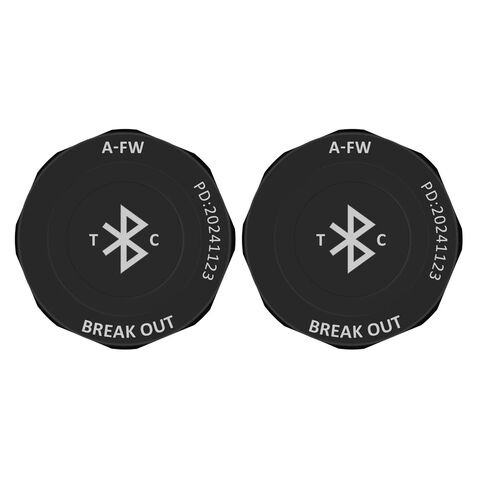
Alien Rider’s smart displays are some of the most popular CarPlay and Android Auto screens for motorcycles (see our CarPlay screen guide). This sensor set adds real-time tire pressure and temperature to the screen and triggers alerts if something looks wrong. It’s sold as a set and is the cheapest system here.
Check compatibility before you order. This version only works with the M12S, M2QR, M2BMW and M2PROMAX. Alien Rider sells separate sensors for the M2S and M2 Pro. Battery type and water rating aren’t listed, and stock comes and goes, so check availability before you plan around it.
Pros
- Lowest price tier
- Pressure and temperature on your existing screen
- Abnormal-reading alerts
Cons
- Only works with specific Alien Rider units
- Battery and IP specs not published
- Stock is patchy
6. Chigee TPMS sensors: best internal sensors
Chigee makes two sensor types for its AIO-6, AIO-5, XR-2 and XR-3 units. The external sensor (MFP0019) is a valve-cap design with a replaceable BR1225 battery. The more interesting one is the internal sensor (MFP0018), which mounts inside the tire on the valve stem. That means nothing for a thief to unscrew, nothing to knock off when you check pressure, and no extra weight hanging off the valve.
Chigee lists the internal sensor’s range as 0–8 bar (about 116 psi) with 0.01 bar accuracy, a 2–3 year battery life, and separate minimum-pressure alerts for front and rear. The battery isn’t replaceable, so you replace the sensor when it dies, ideally at a tire change. Fitting it means breaking the bead, so have it done when you next replace tires. It isn’t compatible with the Chigee G3.
Pros
- Internal sensors can’t be stolen or knocked off
- Long battery life
- Separate front and rear alerts
Cons
- Only works with Chigee units
- Internal version needs a tire off to fit
- Sealed battery
7. Garmin Tire Pressure Monitor Sensor: best for older zūmo owners
If you still run a zūmo 345LM, 390LM, 395LM, 590LM or 595LM, Garmin’s own sensors put tire pressure on your GPS screen. They’re external screw-on caps for metal valve stems, use Garmin’s ANT wireless link, run on replaceable BR1225 batteries and are IPX7 rated, with Garmin quoting ±1 psi accuracy. You set a minimum pressure for each tire and the zūmo warns you if it drops below, along with low-battery and lost-sensor warnings.
The important catch: the current zūmo XT2 and XT3 don’t list tire pressure sensor support in their manuals, and the original zūmo XT doesn’t support them either. If you’re shopping for a new GPS (see our best motorcycle GPS picks), plan on a standalone TPMS instead. Garmin’s sensors also don’t alert on high pressure or temperature.
Pros
- Readings on your zūmo screen
- IPX7 sensors, replaceable batteries
- Per-tire minimum pressure alerts
Cons
- Not supported by zūmo XT, XT2 or XT3
- No temperature or high-pressure alerts
How to choose a motorcycle TPMS
Unlike cars, motorcycles sold in the U.S. aren’t required to have tire pressure monitoring. The federal TPMS rule, FMVSS 138, covers passenger cars, trucks, buses and multipurpose vehicles, not bikes. So unless your motorcycle came with TPMS from the factory, an aftermarket kit is the only way to watch your pressures as you ride. Here’s how to pick one.
Phone app or dedicated display?
App-based systems like the FOBO Bike 2 and TireMinder cost less per feature and can push alerts to your headset, so you don’t have to look down. They depend on your phone being on and in range, though. A dedicated display like the SYKIK puts the numbers in front of you all the time with no phone involved. If you already run a smart screen or GPS, the best option is usually that brand’s own sensors, because they add no extra screen or app.
External or internal sensors?
External valve-cap sensors fit in seconds and you can change their batteries yourself. They add a little weight to the valve, can be stolen, and you have to remove them to add air. Internal sensors like Chigee’s MFP0018 sit inside the tire, so they’re protected and invisible, but you need the tire off to fit them, and the battery is sealed. Most riders are happiest with external sensors, while riders who park in public a lot may prefer internal ones.
Valve stems matter
Cap-style sensors add weight and leverage to the valve. Rubber snap-in valves can flex or crack at speed with a sensor on them, which is why several makers specify metal valve stems. If your bike has rubber valves, swap to metal bolt-in stems at your next tire change. Angled (90-degree) stems also make it much easier to check air with the sensor in place. Our guide on how to change a motorcycle tire covers the job.
Alerts that actually help
Look for low and high pressure alerts you can adjust, a temperature alert, and above all a leak alert. A slow leak from a screw is the most common tire problem, and catching it early is the whole point. Alerts through your Bluetooth headset are a big plus because a flashing phone screen is easy to miss in traffic.
Batteries and weather
Coin-cell sensors usually last around a year. Keep a pack of spares in your tool roll and check the battery type before you buy. Look for an official IP rating (IP57, IP67 or IPX7) rather than vague “waterproof” claims if you ride in rain or wash your bike often.
A TPMS doesn’t replace your gauge
The Motorcycle Safety Foundation tire guide says to check cold pressure at least once a week and before long trips, and notes you still need an accurate gauge even with TPMS. Use the gauge to set pressures and the TPMS to warn you between checks. Correct pressure also helps your tires last; see how long motorcycle tires last and our picks for the best motorcycle tires and dual-sport tires.
FAQ
Are motorcycle TPMS kits worth it?
For most riders, yes. A front and rear set costs less than one new tire, and a leak alert can save you from a sudden flat at speed. Touring and two-up riders get the most from one, because load and long days make pressure matter more. They’re also a natural addition to the gear you pack for a tour.
Do external TPMS sensors affect wheel balance?
Cap sensors weigh only a few grams, and most riders never notice them. If you feel a new vibration after fitting them, have the wheel rebalanced with the sensor in place.
Can I add air without removing the sensors?
No. With external cap sensors, you unscrew the sensor, add air and screw it back on. If your sensors use an anti-theft lock nut, keep the small tool with your tire gauge. Internal sensors don’t need to be removed.
How long do TPMS sensor batteries last?
Most external sensors run about a year on a coin cell, depending on how much you ride. Chigee rates its sealed internal sensor at two to three years.
Will a TPMS work with my Garmin zūmo XT2 or XT3?
Not as far as Garmin’s manuals show. Garmin’s tire sensors work with older zūmo models like the 395LM and 595LM. XT-series owners should use a standalone system like the FOBO Bike 2 or SYKIK.
Verdict
Buy the FOBO Bike 2 if you want the most complete standalone system, or the SYKIK Rider SRTP300 if you want a cheap display that ignores your phone. If you already own an INNOVV, Alien Rider or Chigee screen, add that brand’s sensors and keep everything on one display. Whatever you pick, keep checking with a gauge, and pair your TPMS with good basic maintenance. Parking somewhere sketchy? Our motorcycle alarm guide covers the next step.
Browse all our accessory guides.