Throttle Buff is reader-supported: we may earn a commission when you buy through links on this page. Read our affiliate disclosure.
How we compared them: this comparison is research-based, built from manufacturer specifications, safety certifications and owner feedback rather than a side-by-side test. How we research.
The Bell Bullitt and Biltwell Gringo are the two retro full-face helmets most riders shortlist for cafe racers, scramblers, bobbers and classic cruisers. Both have the vintage, round-shell look, but they’re built for different budgets and priorities. This comparison covers the current versions in 2026, including the updated Bell Bullitt GT and Biltwell’s Gringo, Gringo S and Gringo SV, based on manufacturer specs from Bell and Biltwell, certifications, retailer listings and published reviews. Whether you think of it as Bell Bullitt vs Biltwell Gringo or Biltwell Gringo vs Bell Bullitt, the trade-off is the same: weight, vents and features against price.
Quick answer: buy the Bell Bullitt GT if you want the more premium helmet, with a composite shell, better ventilation, a tool-free shield and a wide eyeport. Buy a Biltwell Gringo S or SV if you want the classic look for around $275 to $300 and don’t mind a heavier ABS shell. The open-eyeport Gringo is the pick if you ride with goggles.
Bell Bullitt vs Biltwell Gringo at a glance
| Bell Bullitt GT | Biltwell Gringo S / SV | |
|---|---|---|
| Shell | Composite (carbon version available), 3 shell sizes | Injection-molded ABS, 3 shell sizes |
| Weight | About 1,450 g (size M); carbon about 1,350 g | About 3.54 lb (~1,600 g) |
| Certification | DOT and ECE 22.06 | DOT and ECE 22.06 |
| Shield | Bubble shield, tool-free ClickRelease, magnetic closure | S: bubble shield with detents; SV: flat shield, anti-fog |
| Ventilation | Closable “Velocity Flow” vents | S: minimal; SV: front, side and rear vents |
| Speakers | Integrated speaker pockets | Ear pockets recessed in the EPS |
| Liner | Removable, washable leather/mesh | Removable |
| Warranty | 5 years | Check listing |
| Price (Nov 2026) | About $400–$470; carbon about $650 | Gringo $250; S $275–$300; SV $300 |
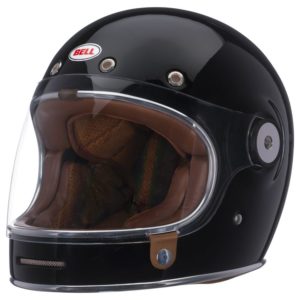
Bell Bullitt vs Bullitt GT: what changed?
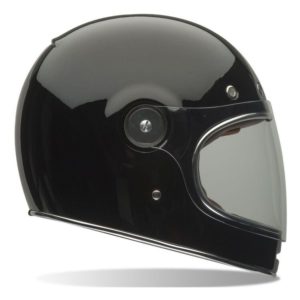
The original Bell Bullitt launched in 2013 and became the default retro full-face. It’s now on closeout at RevZilla, and the Bullitt GT, introduced in early 2025, replaces it. The GT keeps the look but fixes the original’s main complaints:
- Tool-free shield swaps. The original needed a screwdriver; the GT uses ClickRelease and a magnetic closure, with a new gasket around the eyeport.
- Closable vents. The original’s four brow vents couldn’t be closed, which made it drafty and loud. The GT’s Velocity Flow vents open and close.
- Proper speaker and eyewear pockets for an intercom and glasses.
- ECE 22.06 certification alongside DOT, plus a removable, washable leather and mesh liner.
If you find an original Bullitt at a big closeout discount, it’s still a well-made helmet, but the GT is the better buy at similar money.
The Bullitt GT’s composite shell comes in three sizes, so smaller heads don’t end up in an oversized lid, and it weighs about 1,450 grams in medium, noticeably lighter than the Gringo. The large eyeport gives a wide field of view, and Bell offers bubble and flat shields in clear, tinted and other finishes. It has an intermediate-oval fit. Owners and reviewers consistently praise the finish quality and the vintage look, and the original’s biggest weakness, wind noise at freeway speed, is improved by the closable vents and new seals, though no retro helmet is truly quiet. A carbon version cuts weight to about 1,350 grams for about $650.
- Pros: lighter composite shell, closable vents, tool-free shields, speaker pockets, 5-year warranty
- Cons: expensive, still louder than a modern sport-touring helmet
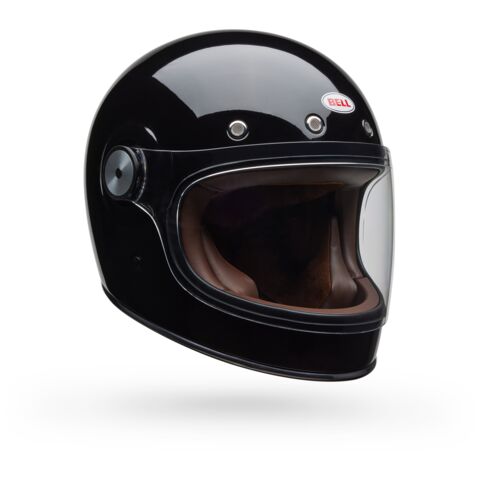
Original Bullitt closeouts: check the Bell Bullitt at RevZilla.
Biltwell Gringo, Gringo S and Gringo SV
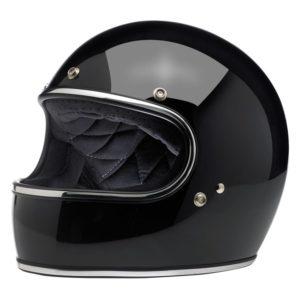
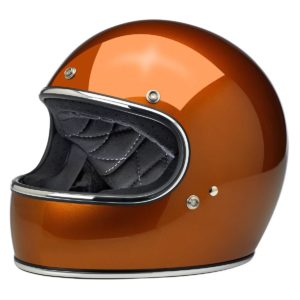
Biltwell offers three versions of its retro full-face, all sharing an injection-molded ABS shell in three shell sizes (XS–S, M–L and XL–2XL), five EPS sizes, and DOT plus ECE 22.06 certification:
- Gringo ($250): no shield. The five-snap eyeport takes bubble or blast shields, or you can wear goggles. It’s the purest vintage look and has the best field of view of the three.
- Gringo S ($275–$300): adds a flip-up bubble-style shield with detents so it can sit cracked open for airflow. The ECE 22.06 version moved to three shell sizes (from two) and a new anti-rattle shield closure; note that old Gringo S shields don’t fit the new version.
- Gringo SV ($300): the most practical version, with front, side and rear vents, adjustable vents above the eyeport and a flat anti-fog, anti-scratch shield.
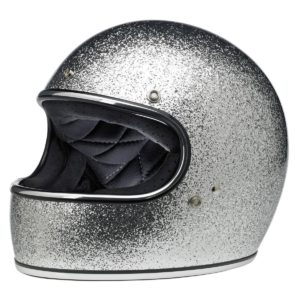
All three weigh around 3.5 pounds, which you’ll notice on long rides compared with the Bullitt GT. Reviewers note the Gringo runs a bit small, so check the size chart and consider going up a size if you’re between sizes. The ear pockets are recesses in the EPS rather than dedicated speaker pockets, so slim speakers work best. Biltwell’s closeout colorways can be heavily discounted.
- Pros: much cheaper, three styles, DOT and ECE 22.06, great retro look
- Cons: heavier ABS shell, limited ventilation on the Gringo and Gringo S, runs small

Gringo and Gringo S: check Biltwell Gringo prices at RevZilla.
Head-to-head comparison
Safety and certification
Both current helmets are certified to DOT and ECE 22.06, the latest European standard, which includes tests at more impact points and speeds than the older 22.05. That puts them on equal footing on paper. The Bullitt GT’s composite shell is lighter for the same certification. For more on standards, see our guide to helmet safety ratings.
Comfort and weight
The Bullitt GT wins here: it’s roughly 150 grams lighter, and its washable leather and mesh liner is plusher. The Gringo’s lining is simpler and the helmet sits a little heavier on the neck over long distances.
Ventilation and noise
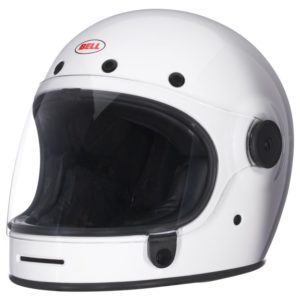
An older head-to-head comparison found the Bullitt flowed more air than the Gringo, and the GT’s closable vents widen that gap. The Gringo SV is the only Biltwell with real ventilation. Neither brand is quiet at highway speed; earplugs are a good idea with either. See our tips on stopping visor fogging if you ride in cool, damp weather.
Field of view
The open-eyeport Gringo has the best field of view, while the Bullitt GT and Gringo S/SV are similar, with wide, retro-shaped openings.
Intercom compatibility
The Bullitt GT has integrated speaker pockets, making it the easier helmet for an intercom. The Gringo works with slim speakers. See our best motorcycle intercoms.
Value
The Gringo S and SV cost about $100 to $200 less than the Bullitt GT. If the look is what you’re after and you ride mostly short distances, that’s hard to argue with.
Bell Bullitt alternatives
- Biltwell Lane Splitter ($300): a more modern, angular retro shape with DOT and ECE 22.06 certification.
- Shoei Glamster 06: a premium retro full-face with ECE 22.06, four shell sizes and a Pinlock insert included. It’s mainly sold in Europe and the UK, so check certification for your market.
- Arai Concept-XE: Arai’s retro full-face with three shell sizes, ECE 22.06 and speaker pockets, also mainly a UK/EU-market helmet.
For more choices, see our guides to the best cafe racer helmets and best Bell helmets.
Biltwell Gringo vs Bell Bullitt: which should you buy?
- Buy the Bell Bullitt GT if you ride longer distances, want an intercom and can spend $400 or more.
- Buy the Biltwell Gringo SV if you want the look on a budget but still need ventilation and a flat shield.
- Buy the Gringo S for the classic bubble-shield look at the lowest price with a shield.
- Buy the Gringo if you ride with goggles and want the most vintage style.
Want more options? See our Bell Bullitt alternatives guide for every current retro full-face helmet.
FAQ
Is the Bell Bullitt ECE 22.06 certified?
The current Bullitt GT is certified to DOT and ECE 22.06. The original Bullitt was DOT and ECE 22.05.
Is the Biltwell Gringo DOT approved?
Yes. The Gringo, Gringo S and Gringo SV are DOT and ECE 22.06 certified.
Is the Bell Bullitt loud?
The original was known for wind noise because its brow vents couldn’t close. The GT improves this with closable vents and new seals, but retro helmets are rarely quiet at highway speeds.
Do Biltwell helmets run small?
Many owners and retailers say the Gringo runs slightly small, so check the size chart carefully. See how to size and buy a helmet.
Can I fit a Bluetooth intercom?
Yes. The Bullitt GT has dedicated speaker pockets. The Gringo has recesses in the EPS that suit slim speakers.
Is the Biltwell Gringo better than the Bell Bullitt?
Not overall. In a Biltwell Gringo vs Bell Bullitt matchup, the Bullitt GT is lighter, better ventilated and easier to fit with an intercom. The Gringo wins on price, and the open-eyeport Gringo is the better choice if you ride in goggles.
Do the Bell Bullitt and Biltwell Gringo fit the same?
Not quite. Bell lists the Bullitt GT as an intermediate-oval fit, and the Gringo is often reported to run slightly small. Measure your head and use each brand’s size chart rather than assuming the same size.
Which is lighter, the Bullitt or the Gringo?
The Bullitt GT, at about 1,450 grams in medium, versus roughly 1,600 grams for the Gringo.
Verdict
The Bell Bullitt GT is the better helmet: lighter, better vented, easier to live with and ready for an intercom. The Biltwell Gringo family is the better value, with three styles that all meet ECE 22.06. Pick the Bullitt GT for longer rides and the Gringo SV or Gringo S for style on a budget.
Browse all our helmet guides.