The best beginner motorcycle helmet is a comfortable, certified full-face that fits you well and doesn’t cost a fortune, and the Bell Lithium MIPS ticks every box. If you want a premium first helmet that will last, the Shoei RF-SR is the step up, and the HJC C10 is the cheapest helmet we’d trust.
As a new rider, you don’t need racing features. You need protection, a good fit and a clear view. We picked current 2026 helmets with DOT or ECE 22.06 certification and replaced the discontinued models from our earlier list. Building your whole kit? See our best motorcycle gear for beginners.
Quick picks
- Bell Lithium MIPS: best overall for beginners
- Scorpion EXO-R430: best value
- HJC C10: cheapest full-face
- AGV K1 S: best for sport bikes
- Shoei RF-SR: best premium first helmet
- HJC i91: best beginner modular
- Biltwell Gringo S ECE 22.06: best for cruisers
Beginner helmets compared
| Helmet | Type | Certification | Best for | Price |
|---|---|---|---|---|
| Bell Lithium MIPS | Full-face | DOT, MIPS | Most new riders | $ |
| Scorpion EXO-R430 | Full-face | DOT | Value | $ |
| HJC C10 | Full-face | DOT | Tight budgets | $ |
| AGV K1 S | Full-face | ECE 22.06 | Sport bikes | $ |
| Shoei RF-SR | Full-face | DOT, Snell | Long-term buy | $$$ |
| HJC i91 | Modular | DOT, ECE 22.06 | Commuting, touring | $$ |
| Biltwell Gringo S | Retro full-face | ECE 22.06 | Cruisers | $$ |
The best beginner motorcycle helmets for 2026
1. Bell Lithium MIPS: best overall for beginners

The Lithium is a budget full-face helmet with MIPS, a low-friction layer designed to reduce rotational forces in an angled impact. It is comfortable, easy to find in most sizes and priced for new riders.
It is a great first helmet for commuting and weekend rides.
Pros
- MIPS at a budget price
- Comfortable everyday fit
- Wide size range
Cons
- Heavier than premium helmets
- Average ventilation
2. Scorpion EXO-R430: best value

The EXO-R430 gives you a Pinlock-ready shield and a removable, washable liner for a low price. Scorpion’s budget helmets have a good reputation for fit and comfort.
Pros
- Good features for the price
- Pinlock-ready shield
- Washable liner
Cons
- Not very quiet
- Limited venting
3. HJC C10: cheapest full-face

The C10 is HJC’s entry-level full-face. It is simple, light on features and meets DOT. If your budget is very tight, it is a far better choice than a cheap no-name helmet. See more in our helmets under $100.
Pros
- Very low price
- DOT certified
- From a major brand
Cons
- Basic liner
- Noisy at speed
4. AGV K1 S: best for sport bikes
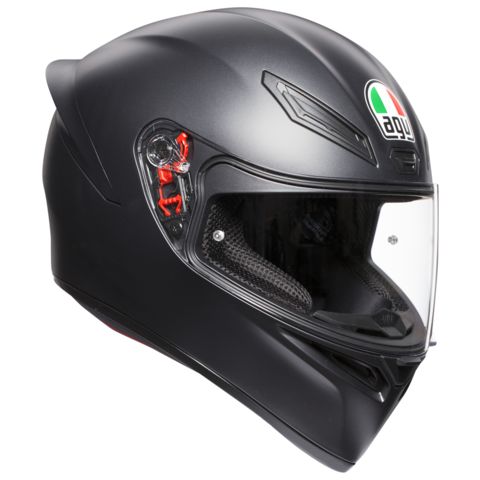
Starting on a sport bike or naked bike? The K1 S has AGV’s racing-inspired shape and a spoiler for stability at speed, and it meets ECE 22.06.
Pros
- ECE 22.06 at a low price
- Sporty, stable shape
- Lots of graphics
Cons
- Basic comfort liner
- Loud on the highway
5. Shoei RF-SR: best premium first helmet

The RF-SR is Shoei‘s entry-level full-face. You get Shoei’s build quality, comfort and fit for much less than the RF-1400. If you know you’ll keep riding, it is a helmet that will last you years.
Pros
- Shoei quality for less
- Comfortable and quiet
- Snell and DOT certified
Cons
- Costs more than budget helmets
- Fewer features than the RF-1400
6. HJC i91: best beginner modular

If you’ll mostly commute or tour, a modular lets you lift the chin bar to talk or drink at stops. The i91 has an internal sun shield and meets DOT and ECE 22.06. See all options in our best modular helmets.
Pros
- Flip-up chin bar
- Internal sun shield
- ECE 22.06
Cons
- Heavier than a full-face
- Louder than premium modulars
7. Biltwell Gringo S ECE 22.06: best for cruisers

New to cruisers? The Gringo S has a classic look and full-face protection with ECE 22.06 certification, which beats the half helmets many new cruiser riders choose.
Pros
- Classic style with full-face protection
- ECE 22.06
- Compact shell
Cons
- Limited venting
- Noisy at speed
How to choose your first motorcycle helmet
Pick a full-face helmet
A full-face helmet protects your chin and face, which take many impacts in a crash. Modulars are a good alternative. Read about the options in types of motorcycle helmets.
Check the certification
Every helmet sold for road use in the US must meet DOT (NHTSA). ECE 22.06 and Snell are extra marks of quality. See our guide to helmet safety ratings.
Get the fit right
Measure your head and try helmets on if you can. A new helmet should feel snug, as the liner will loosen a little. Our helmet sizing guide shows how.
Don’t overspend on features
Expensive helmets are lighter, quieter and more comfortable, but a certified budget helmet that fits well protects you. Spend what you can afford and replace it after a crash.
Take a course
A training course is the best safety upgrade for new riders. The Motorcycle Safety Foundation runs them across the US.
FAQ
What type of helmet is best for beginners?
A full-face helmet, because it gives the most protection. A modular is a good second choice if you want to lift the chin bar at stops.
How much should a beginner spend on a helmet?
You can get a good certified helmet for a low price. Spend more for comfort and lower weight if your budget allows.
Is a used helmet OK for a beginner?
No. You can’t know whether a used helmet has been dropped or crashed, which can damage the foam inside.
How long does a motorcycle helmet last?
About five years, or until any crash. See motorcycle helmet expiration.
Do I need a Bluetooth helmet as a beginner?
No, but a headset makes GPS and calls safer. Add one later; see our budget Bluetooth headsets.
Verdict
Most new riders should buy the Bell Lithium MIPS. If you can stretch, the Shoei RF-SR is a helmet you won’t outgrow. Once you have a helmet, browse our best motorcycle helmets for your next upgrade.