Throttle Buff is reader-supported: we may earn a commission when you buy through links on this page. Read our affiliate disclosure.
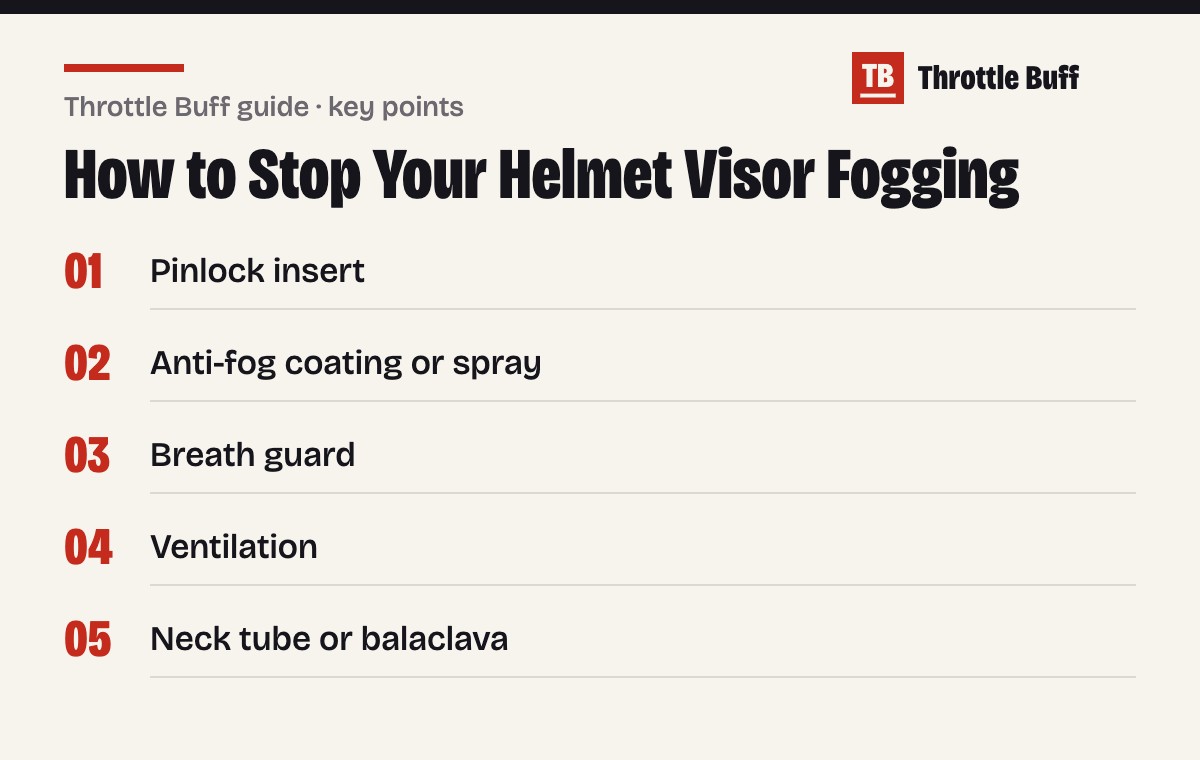
To stop your helmet visor fogging, fit a Pinlock anti-fog insert if your visor supports one: it’s the most effective fix. Other options are anti-fog sprays and wipes, a breath guard, opening the chin vent, and cracking the visor slightly at low speeds. A balaclava or neck tube that directs breath down also helps.
Helmets with great anti-fog features
Many helmets in our best motorcycle helmets and modular helmets come Pinlock-ready or with an insert included.

Why visors fog
Your breath is warm and humid. When it hits a visor that’s colder than the dew point, the moisture condenses into tiny droplets. That’s why fogging is worst on cold, damp mornings and when you stop at lights, as airflow drops. Helmets with big, adjustable chin vents fog less; see how the best dual-sport helmets compare on airflow.
Fixes ranked by effectiveness
- Pinlock insert: a second clear lens that seals against the visor, creating a double-glazed air gap. It’s the most effective fix. Many helmets come “Pinlock-ready” with pins on the visor; check yours before buying.
- Breath guard: a rubber deflector under the chin bar that directs your breath down and away from the visor.
- Open the vents: chin and brow vents move air across the visor.
- Crack the visor: many helmets have a “city” position a few millimetres open.
- Anti-fog spray or wipes: a short-term fix; make sure it’s safe for coated visors.
- Electrically heated visor: used on snowmobile and some touring helmets; see best snowmobile helmets.
What not to do
- Don’t wipe the inside of an anti-fog-coated visor with a dry cloth or glove; it scratches the coating.
- Don’t use household glass cleaners that contain ammonia; they damage polycarbonate.
- Don’t ride with a fogged visor. Pull over and clear it.
If you wear glasses
Glasses fog too. Use anti-fog lens wipes, and choose a helmet with good chin venting or a modular helmet; see modular vs full-face and our helmet cleaning tips to keep your visor clear.
Face coverings can push warm breath up onto the visor. If you ride in a balaclava, choose one with a mesh or open mouth area; our motorcycle balaclava guide notes which picks breathe best.
Fighting glare as well as fog? A photochromic shield darkens in sunlight and clears in shade, and many are Pinlock-ready. See the best photochromic motorcycle visors for the shield that fits your helmet.
FAQ
Do Pinlock inserts really work?
Yes. They’re the most reliable anti-fog solution for motorcycle visors.
Can I fit a Pinlock to any visor?
Only to visors with Pinlock pins. Check your helmet’s model.
Does fogging matter for safety?
Yes. A fogged visor can blind you in seconds, so fix it before winter. See riding in the rain.
What about glasses fogging?
Make sure glasses sit close to your face and use an anti-fog treatment; a breath guard helps too.
The bottom line
Fit a Pinlock if you can, add a breath guard, and use your vents. Your visor will stay clear in almost any weather.
Browse all our helmet guides.