Throttle Buff is reader-supported: we may earn a commission when you buy through links on this page. Read our affiliate disclosure.
AAA rated motorcycle gear is clothing certified to the top class of EN 17092, the European standard for motorcycle garments. The classes run AAA, AA, A, B and C. More letters mean the garment survived a harder abrasion test, so AAA is the most protective and usually the heaviest, and A is the lightest.
The rating covers the whole garment: its materials, seams and fit. It is separate from the level 1 or level 2 rating on the armor inside. The table shows what each class has to pass.
A, AA and AAA ratings compared
| Class | Standard | Zone 1 abrasion test | Impact protectors | How the labs and makers describe it |
|---|---|---|---|---|
| AAA | EN 17092-2 | Fall simulated at 120 km/h (about 75 mph) | Shoulder, elbow, hip and knee required | Heavyweight |
| AA | EN 17092-3 | Fall simulated at 70 km/h (about 43 mph) | Shoulder, elbow, hip and knee required | Mediumweight |
| A | EN 17092-4 | Fall simulated at 45 km/h (about 28 mph) | Shoulder, elbow and knee required. Hip optional | Lightweight |
| B | EN 17092-5 | Same abrasion level as class A | None | Abrasion protection only |
| C | EN 17092-6 | No minimum abrasion requirement | Impact protection for the covered areas only | Worn with a AAA, AA, A or B garment |
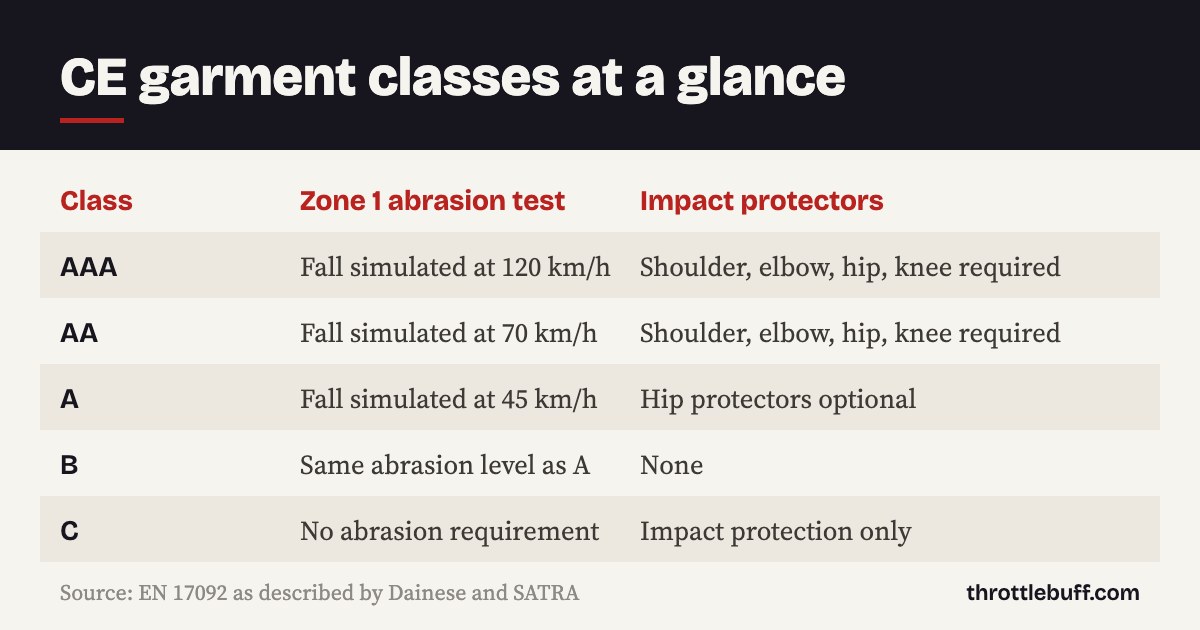
Sources: test speeds and weight terms from Dainese’s explanation of jacket and pants certification, protector and class B and C rules from the test lab SATRA, both read in November 2026. Part 1 of the standard describes the test methods, so it should not appear as a class on a label.
What is AAA rated motorcycle gear tested for?
The headline test is impact abrasion. SATRA describes a sample sliding from a set speed to a standstill on a real concrete road surface. The garment passes if no hole of 5 mm or more opens in the layer closest to the body.
The speed depends on the class and the part of the garment. The standard splits the body into three zones by how likely each is to hit the road. Dainese describes them like this:
- Zone 1: shoulders, elbows, hips and knees. The most exposed areas, and the ones tested hardest.
- Zone 2: arms, back, buttocks and the outer part of the legs.
- Zone 3: chest, abdomen, inner arms, and the inside and back of the legs. The least exposed.
The speeds in the table are the zone 1 figures. Garments are also tested for seam strength, tear strength, fit and innocuousness, meaning the garment must not injure its wearer. After cleaning, they must not change size by more than 5 percent.
Is AAA always the right choice?
No. AAA is the most abrasion resistant class, but that strength comes with weight and stiffness, which is why Dainese labels the three main classes heavyweight, mediumweight and lightweight.
- Track days and fast road riding: AAA. This is where leather suits sit. See our best motorcycle racing suits.
- Touring, commuting and all-round road use: AA is the practical target. Many textile jackets and riding jeans reach it. Start with our best motorcycle jackets and best motorcycle riding pants.
- Hot weather and city speeds: A rated mesh and casual gear trades abrasion resistance for airflow.
Riding jeans use the same classes, and our best motorcycle jeans guide points out the AAA rated options. For how the materials compare, see textile vs mesh vs leather riding gear.
Where B and C fit
Class B is a garment with class A abrasion protection and no impact protectors. Class C is the reverse: it provides impact protection for the areas its protectors cover, with no minimum for abrasion. SATRA says class C garments are meant to supplement a AAA, AA, A or B garment. Armored base layers such as armored shorts are the usual examples, along with some knee pads worn under jeans.
How to check the rating on a garment
Look at the sewn-in label, not the hang tag. Dainese notes that the class letters must be clearly shown on the product labels. You should see the class and the standard number together, for example EN 17092-3:2020 on a class AA jacket. If a listing says “CE armor” but gives no garment class, only the armor is certified.
In Europe, motorcycle clothing has been regulated as personal protective equipment since April 2018. The US has no equivalent rule for riding garments, but the class is still a useful filter when you work out how much to spend on motorcycle gear.

FAQ
What does AAA mean on motorcycle gear?
It means the garment passed the highest class of EN 17092. Its zone 1 areas survived an abrasion test that simulates a fall at 120 km/h, and it has shoulder, elbow, hip and knee protectors.
Is AA or AAA better?
AAA is more abrasion resistant. AA is lighter and is tested at 70 km/h in zone 1, which makes it a sound choice for most road riding.
Is A rated motorcycle gear safe?
It is certified protective clothing, tested at 45 km/h in zone 1. It suits lower speeds and hot weather better than highway use.
Does AAA gear have level 2 armor?
Not necessarily. The garment class and the armor level are separate ratings, so check both labels.
Is CE rated gear required in the US?
No. The EN 17092 classes are a European requirement. US riders can still use them to compare gear.
Verdict
AAA rated motorcycle gear is the top abrasion class under EN 17092, built for track and fast road riding. AA is the practical all-rounder, and A is for heat and city speeds. Check the sewn-in label for the class and the armor level separately, then buy the highest class you will wear on every ride. New riders can start with our motorcycle gear for beginners guide.
Browse all our riding gear guides.