
Throttle Buff is reader-supported: we may earn a commission when you buy through links on this page. Read our affiliate disclosure.
How we chose: this guide is research-based, built from manufacturer specifications, safety certifications and owner feedback rather than hands-on testing. How we research.
The best motorcycle hitch carrier for most riders in 2026 is the Black Widow MCC-600: a 600 lb steel carrier with a long 71″ ramp, a wide tire track and a sensible price. If wobble drives you crazy, the MotoTote Sport is built around a single-bolt anti-wobble mount, and if you just need to haul a light bike on a budget, the BILT FACTORY carrier at RevZilla does the job for less.
Quick picks
-
-
Best anti-wobble design
- Capacity
- 600 lb
- Material
- Steel
- Price
- $$$
-
Best heavy-duty
- Capacity
- 600 lb
- Material
- Powder-coated
- Price
- $$$
-
- Best lightweight aluminum: Black Widow AMC-400
- Best for small bikes: Fire Power Motorcycle Carrier
A hitch carrier lets you haul a motorcycle behind an SUV, truck or RV without a trailer. Our old list included discontinued models and missed the most important part: matching the carrier to your bike’s weight and your vehicle’s tongue weight. This 2026 rewrite covers six current carriers, with specs from the manufacturers. We haven’t loaded and towed them ourselves.
Motorcycle hitch carriers compared
| Carrier | Capacity | Material | Carrier weight | Ramp | Stabilizer | Price |
|---|---|---|---|---|---|---|
| Black Widow MCC-600 | 600 lb | Steel | 98 lb | 71″ | Anti-rattle device | $$ |
| MotoTote Sport | 600 lb | Steel | 60 lb | 56″ | ZeroWobble+ mount | $$$ |
| VersaHaul VH-SPORT RO | 600 lb | Powder-coated | Not listed | 71″ | Anti-tilt lock bracket | $$$ |
| BILT FACTORY | 500 lb | Steel | Not listed | Included | Anti-tilt device | $ |
| Black Widow AMC-400 | 400 lb | Aluminum | 36.5 lb | 47″ | Anti-rattle device | $ |
| Fire Power | 300 lb | Steel | Not listed | Included | Threaded wedge lock | $$ |
The best motorcycle hitch carriers of 2026
1. Black Widow MCC-600: best overall
Black Widow is one of the most common names in hitch carriers, and the MCC-600 is the one most riders should start with. It’s rated for 600 lb, built from powder-coated 14-gauge steel, and fits Class III or IV hitches with a 2″ receiver. The 79″ track is 7-3/4″ wide and takes tires up to 7.25″ wide, so it handles most street bikes and dual sports (Black Widow notes 200 mm tires won’t fit).
The included ramp is 71″ long and 7-1/2″ wide, and it stores on the carrier. A longer ramp gives a gentler slope, which makes loading much less nerve-racking. An anti-rattle device reduces play in the receiver. The carrier itself weighs 98 lb, which counts against your tongue weight, so check your vehicle’s rating before you buy.
Pros
- 600 lb capacity
- Long 71″ ramp stores on the carrier
- Wide track fits most street tires
- Good price for a 600 lb carrier
Cons
- Heavy at 98 lb
- Won’t fit 200 mm rear tires
2. MotoTote Sport: best anti-wobble design
Wobble is the most common complaint about hitch carriers, and MotoTote designed the Sport around fixing it. Its ZeroWobble+ single-bolt hitch mount is designed to eliminate rack movement in transport. The carrier is powder-coated steel with black zinc hardware, rated for 600 lb, and weighs only 60 lb, much lighter than most steel carriers.
It fits a standard 2″ receiver and takes front tires up to 5″ wide and rear tires up to 8.5″, with wheelbases up to 65″. You can set the track 16, 18 or 20 inches from the vehicle for clearance. The included EasyLoad ramp is 56″ long with an average slope of about 17°. It costs more than the Black Widow, but for long trips, a quiet, stable carrier is worth it.
Pros
- ZeroWobble+ mount
- Light for a steel carrier at 60 lb
- Takes rear tires up to 8.5″
- Adjustable distance from vehicle
Cons
- Pricier
- Shorter 56″ ramp
- 65″ wheelbase limit
3. VersaHaul VH-SPORT RO: best heavy-duty
VersaHaul builds premium carriers for riders who haul often. The VH-SPORT RO is rated for 600 lb, fits any Class III or IV hitch and includes a 71″ ramp and an anti-tilt lock bracket to stop the carrier rocking in the receiver. The rail is 77.5″ long and 7.875″ wide, and VersaHaul says it handles wide tires. Two reflectors are included, and VersaHaul says it stores away easily.
It’s the most expensive carrier here, and VersaHaul lists only a shipping weight (about 111 lb with the ramp), so expect it to be heavy. Choose it if you haul a big bike regularly and want a carrier built to last.
Pros
- 600 lb rating
- Anti-tilt lock bracket
- Long 71″ ramp, wide rail
- Reflectors included
Cons
- Most expensive pick
- Heavy
4. BILT FACTORY Motorcycle Carrier: best budget

The BILT FACTORY carrier is RevZilla’s budget option, and it may arrive in “Trackside” packaging. It’s all steel with a powder-coated finish, rated for 500 lb, and fits Class III or IV hitches only. The included ramp lets you load from either side and attaches to the carrier for storage, and an anti-tilt device reduces movement in the receiver.
You can move the wheel track bolts to adjust the tire position. The maximum tire width is 4.75″, so it suits dirt bikes, dual sports and smaller street bikes rather than wide-tired sport bikes or cruisers. BILT says you need at least four tie-downs and two wheel straps (sold separately) to secure a bike.
Pros
- Low price
- Loads from either side
- Anti-tilt device
- Adjustable tire position
Cons
- 500 lb limit
- 4.75″ max tire width
- Tie-downs not included
5. Black Widow AMC-400: best lightweight aluminum
If you have to lift the carrier on and off by yourself, weight matters, and at 36.5 lb the aluminum AMC-400 is the lightest carrier here. It’s rated for 400 lb, fits Class III or IV 2″ receivers, and includes a self-storing 47″ ramp. The track is 5-1/2″ wide, and an anti-rattle device reduces play.
The short ramp makes for a steep load, so Black Widow sells an AMC-400L version with a 6′ ramp, plus a folding AMC-400-F. With a 400 lb limit, it’s best for dirt bikes, small dual sports and scooters.
Pros
- Very light at 36.5 lb
- Aluminum won’t rust
- Low price
Cons
- 400 lb limit
- Short 47″ ramp
- Narrow 5.5″ track
6. Fire Power Motorcycle Carrier: best for small bikes
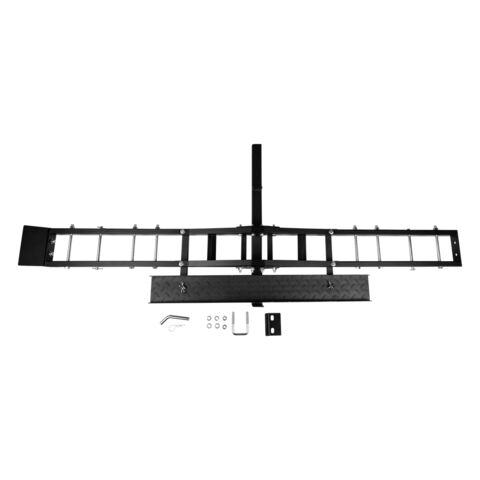
The Fire Power carrier is made in the USA and rated at 300 lb, which suits pit bikes, small dirt bikes and minibikes. It has a 72″ channel of 3/16″ steel, a heavy-duty 10-gauge support bracket and an 11-gauge receiver tube. Its threaded wedge-lock hitch system is designed to virtually eliminate hitch wobble.
It’s reversible, so you can load from either side, and the adjustable front wheel chock centers any size bike. Punched holes let you strap down the rear wheel, and the included ramp locks onto the carrier and stores between the wheels. It works with any 2″ Class III hitch.
Pros
- Wedge-lock anti-wobble hitch
- Adjustable wheel chock
- Made in the USA
Cons
- 300 lb limit
- Pricier than other small-bike options
How to choose a motorcycle hitch carrier
Check your tongue weight first
This is the most important step, and the one most people skip. Your vehicle’s hitch has a maximum tongue weight, the downward load it can carry. A hitch carrier puts the full weight of the bike and the carrier on that hitch, far out behind the bumper. Add your bike’s wet weight (with fuel) to the carrier’s weight and compare it to the lower of your vehicle’s and hitch’s tongue weight ratings. NHTSA’s towing safety guide explains hitch classes and tongue weight. Most motorcycle carriers need a Class III or IV hitch with a 2″ receiver.
Match the carrier to your bike
Carrier ratings run from about 300 lb to 600 lb. That rules out most heavy cruisers and baggers. Hitch carriers are realistic for dirt bikes, dual sports and lighter street bikes. Check tire width (the BILT takes 4.75″, the MotoTote 8.5″ at the rear) and wheelbase (the MotoTote lists a 65″ limit). Big bikes belong on a trailer.
Steel or aluminum?
Steel carriers are stronger and usually carry more, but they’re heavy (the MCC-600 is 98 lb). Aluminum carriers like the AMC-400 are light and rust-proof but carry less.
Ramps and loading
A longer ramp gives a gentler slope. Loading a bike onto a carrier is easier with two people: one guiding the bike, one steadying it. Ride or push it slowly, keep the front brake covered, and never stand directly behind the ramp.
If your carrier doesn’t include a ramp, or you also haul in a pickup, our guide to choosing the right size motorcycle ramp shows how long a ramp your load height needs.
Wobble, tie-downs and security
An anti-tilt or anti-wobble device keeps the carrier steady. Use at least four quality ratchet straps, two at the front and two at the rear, plus a wheel strap, and keep the front suspension slightly compressed. For dirt bikes in a truck or trailer instead, the Risk Racing Lock N Load Pro holds the bike by its footpegs without straps. Lock the bike to the carrier at stops; see our motorcycle alarm guide.
Need straps for the carrier? Our guide to the best motorcycle tie-down straps covers cam-buckle and ratchet sets and how to strap a bike down step by step.
Driving with a loaded carrier
A bike hanging off the back changes how your vehicle drives. Expect longer braking distances, softer rear suspension and a much longer overall length when you reverse or park. Take speed bumps and steep driveways slowly, since a carrier can scrape or bottom out. Stop after the first few miles to re-check every strap, then again at each fuel stop. In rain, cover the bike’s controls and seat, and give the chain a clean and lube once you arrive. Our guide to basic motorcycle maintenance covers it. At home, store the carrier and ramp somewhere dry so the powder coat and hardware last, and keep the bike under a portable motorcycle garage if it lives outside.
Lights and license plate
A loaded carrier can block your vehicle’s taillights and plate. Many states require both to be visible, so you may need a light bar or plate relocation kit. Check your state’s rules before a long trip.
FAQ
Can I put a Harley on a hitch carrier?
Usually not. Most Harleys weigh well over 600 lb, above any carrier here and most vehicles’ tongue weight ratings. Use a trailer.
What hitch class do I need?
Most motorcycle carriers require a Class III or IV hitch with a 2″ receiver. Even then, the bike plus carrier must stay under your vehicle’s tongue weight rating.
Do hitch carriers damage motorcycles?
Not if the bike is strapped properly. Over-tightened straps can strain fork seals, and loose ones let the bike shift. Check straps at every stop.
How do I stop a hitch carrier from wobbling?
Use a carrier with an anti-tilt, anti-rattle or wedge-lock device, make sure the hitch pin is tight, and check the hitch itself for wear.
Is a hitch carrier better than a trailer?
A carrier is cheaper, needs no registration in most places and is easier to store. A trailer carries heavier bikes, more than one bike, and puts less strain on your vehicle.
Verdict
Buy the Black Widow MCC-600 for the best mix of capacity and price, the MotoTote Sport if stability matters most, or the BILT FACTORY carrier for light bikes on a budget. Whatever you choose, check tongue weight before anything else. Manufacturer details are on MotoTote and VersaHaul. If you’re heading off on a trip, our list of things to pack for a motorcycle tour and our wheel chock guide will help, and dirt riders should see how to pick a dirt bike and our dual-sport tire picks.
Browse all our accessory guides.


Awesome things here. I’m very satisfied to look your article.
Thanks a lot and I am looking forward to touch you.
Will you please drop me a mail?