Throttle Buff is reader-supported: we may earn a commission when you buy through links on this page. Read our affiliate disclosure.
How we chose: this guide is research-based, built from manufacturer specifications, safety certifications and owner feedback rather than hands-on testing. How we research.
The best four-season motorcycle jacket is the Klim Badlands Pro A3: a laminated Gore-Tex Pro shell that’s waterproof in winter and vents well in summer. The Alpinestars Andes V4 Drystar is the best value, and the REV’IT! Sand 5 H2O is a strong mid-range choice.
Quick picks
-
Best overall
- Waterproofing
- Gore-Tex Pro shell
- Price
- $$$$
-
Best for wet climates
- Waterproofing
- Gore-Tex shell
- Price
- $$$
-
Best road-touring jacket
- Waterproofing
- Gore-Tex shell
- Price
- $$$
-
- Best value: Alpinestars Andes V4 Drystar
A true four-season jacket needs waterproofing, insulation you can remove and big vents. We picked current 2026 jackets that handle all four seasons and replaced older models from our previous list. See also our winter jackets and best motorcycle jackets. To match your jacket on the bottom half, see our waterproof overpants for commuting and touring.
Four-season jackets compared
| Jacket | Waterproofing | Price |
|---|---|---|
| Klim Badlands Pro A3 | Gore-Tex Pro shell | $$$$ |
| REV’IT! Poseidon 3 GTX | Gore-Tex shell | $$$ |
| Klim Latitude | Gore-Tex shell | $$$ |
| REV’IT! Sand 5 H2O | Removable liner | $$$ |
| Alpinestars Andes V4 Drystar | Drystar liner | $$ |
The best four-season motorcycle jackets for 2026
1. Klim Badlands Pro A3: best overall
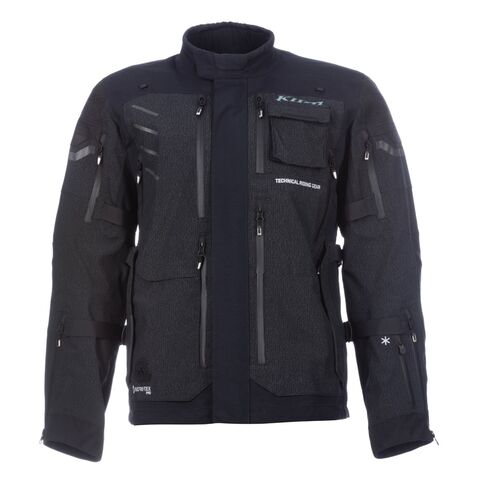
Laminated Gore-Tex Pro, D3O armor and big vents make it the ultimate all-year jacket.
Pros
- Gore-Tex Pro
- Huge vents
- AAA rated
Cons
- Very expensive
2. REV’IT! Poseidon 3 GTX: best for wet climates

A laminated Gore-Tex touring jacket with a removable thermal layer.
Pros
- Laminated Gore-Tex
- Thermal layer
- Great in rain
Cons
- Expensive
3. Klim Latitude: best road-touring jacket
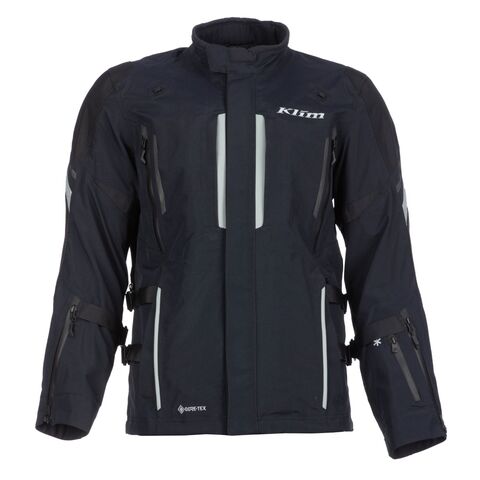
Klim’s road-touring Gore-Tex jacket with room for layers.
Pros
- Gore-Tex shell
- D3O armor
- Layering room
Cons
- No built-in insulation
4. REV’IT! Sand 5 H2O: best mid-range
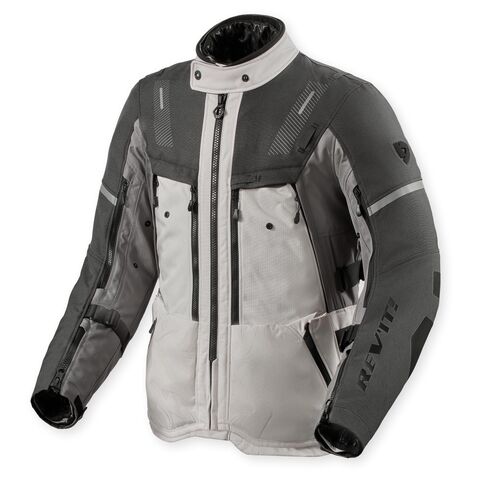
Removable waterproof and thermal liners plus good venting.
Pros
- Versatile
- Good venting
- Fair price
Cons
- Liner waterproofing
5. Alpinestars Andes V4 Drystar: best value
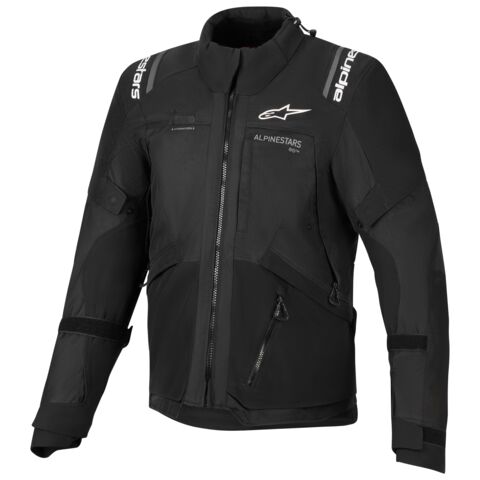
Drystar liner, thermal liner and CE armor at a fair price.
Pros
- Great value
- Warm and waterproof
- CE armor
Cons
- Outer gets wet in heavy rain
What makes a jacket “4-season”
- Removable thermal liner for cold mornings.
- Waterproof membrane, ideally laminated (such as Gore-Tex) so the outer shell doesn’t soak up water.
- Large vents on the chest, arms and back for summer airflow.
- Armour and certification: EN 17092 AA or AAA with CE Level 2 shoulder, elbow and back armour.
- Adjusters at the waist and arms so the fit works with or without layers.
Laminated vs drop-liner jackets
A drop-liner jacket has a waterproof membrane hanging behind the outer fabric. It’s cheaper, but the outer shell gets heavy and wet in the rain. A laminated jacket bonds the membrane to the outer fabric, so it sheds water and dries faster. Laminated jackets cost more but are the better choice for riders who ride in all weather.
Layering for real winter
Even the best 4-season jacket needs help below freezing. Add a heated jacket liner, heated gloves and a neck warmer. See how to stay warm riding and best winter jackets.
Many riding jackets have a pocket for a back protector but ship with a basic foam pad or nothing at all, so check yours. Adding a CE-rated insert is a cheap upgrade; see our motorcycle back protector picks.
FAQ
Can one jacket really work all year?
See our related guides: helmet sizing, intercoms and jackets. For riding safety advice, visit the MSF.
Related reading: the best one- and two-piece riding suits and our Firstgear jacket review.
Verdict
Choose from the picks above based on your budget and how often you ride, and check fit before you buy.
Browse all our riding gear guides.