Throttle Buff is reader-supported: we may earn a commission when you buy through links on this page. Read our affiliate disclosure.
How we chose: this guide is research-based, built from manufacturer specifications, safety certifications and owner feedback rather than hands-on testing. How we research.
The best motorcycle helmet for most riders right now is the Shoei GT-Air 3: quiet, well ventilated, with a drop-down sun visor and a 5-star SHARP rating. If you want something lighter for sport riding, look at the AGV K6 S. On a tighter budget, the HJC i10 is still one of the few Snell-rated helmets you can buy for well under $200.
Quick picks
-
Best overall
- Type
- Sport-touring full-face
- Certification
- DOT, ECE 22.06
- Price tier
- $$$$
-
Best lightweight sport helmet
- Type
- Sport/street full-face
- Certification
- DOT, ECE 22.06
- Price tier
- $$$
-
Quietest full-face
- Type
- Sport full-face
- Certification
- DOT, Snell M2020
- Price tier
- $$$
-
Best for long-oval heads
- Type
- Full-face (long oval)
- Certification
- DOT, Snell M2020
- Price tier
- $$$$
- Best value premium touring: HJC RPHA 72
- Best modular: Shoei Neotec 3
- Quietest modular: Schuberth C5
- Best with MIPS: Bell Lithium MIPS
- Best budget with a sun visor: Sedici Strada 3
- Best under $150: HJC i10
We rebuilt this guide for the current season. Every helmet here is a model sold today, checked against the manufacturer’s spec sheet and independent long-term reviews. We haven’t crash-tested anything ourselves; for impact performance we rely on the official standards and the UK government’s SHARP test programme.
Why it matters: in 2024, 2,045 U.S. riders were killed without a helmet. Our state-by-state helmet law study breaks down where.
Not sure of your size? Use our free motorcycle helmet size calculator to get your size for HJC, Bell, Shoei, Arai and Scorpion.
Best motorcycle helmets compared
| Helmet | Type | Certification | Sun visor | Price tier |
|---|---|---|---|---|
| Shoei GT-Air 3 | Sport-touring full-face | DOT, ECE 22.06 | Yes | $$$$ |
| AGV K6 S | Sport/street full-face | DOT, ECE 22.06 | No | $$$ |
| Shoei RF-1400 | Sport full-face | DOT, Snell M2020 | No | $$$ |
| Arai Signet-X | Full-face (long oval) | DOT, Snell M2020 | No | $$$$ |
| Arai Regent-X | Sport-touring full-face | DOT, Snell M2020 | No | $$$ |
| HJC RPHA 72 | Sport-touring full-face | ECE 22.06 | Yes | $$$ |
| Shoei Neotec 3 | Modular | DOT, ECE 22.06 (P/J) | Yes | $$$$ |
| Schuberth C5 | Modular | DOT, ECE | Yes | $$$$ |
| HJC RPHA 91 | Modular | DOT | Yes | $$$ |
| Bell Lithium MIPS | Touring full-face | DOT, ECE 22.06 | Yes | $$ |
| Sedici Strada 3 | Full-face | DOT, ECE 22.06 | Yes | $$ |
| HJC i10 | Full-face | DOT, Snell M2020 | No | $ |
Price tiers: $ under $200, $$ $200–$350, $$$ $350–$650, $$$$ over $650. Prices move a lot with graphics and sales, so check the current price before you buy.
Specs compared, with sources
Every figure below is copied from the maker’s own page or from the UK government’s SHARP crash-test scheme, and the last column links to it. Where a maker gives no figure, the cell says “not published”; we never estimate.
| Helmet | Weight | Shell sizes | Certification | SHARP rating | Source |
|---|---|---|---|---|---|
| Shoei GT-Air 3 | 3.91 lb | not published | DOT | 5 of 5 | Shoei USA, SHARP |
| AGV K6 S | 1,290 g (smallest shell) | 4 | DOT, ECE 22.06 | 5 of 5 | AGV USA, SHARP |
| Shoei RF-1400 | 3.64 lb | not published | DOT, Snell | not tested under this name | Shoei USA |
| Arai Signet-X | not published | not published | Snell M2020 | not tested under this name | Arai Americas |
| Arai Regent-X | not published | not published | Snell M2020 | not tested under this name | Arai Americas |
| HJC RPHA 72 | not published | not published | DOT, ECE 22.06 | not tested under this name | HJC USA |
| Shoei Neotec 3 | 4.15 lb | not published | DOT | 5 of 5 | Shoei USA, SHARP |
| Schuberth C5 | not listed on the US page | not listed on the US page | DOT | 4 of 5 | Schuberth USA, SHARP |
| HJC RPHA 91 | not published | not published | DOT | 4 of 5 | HJC USA, SHARP |
| Bell Lithium MIPS | 1,728 g ±50 g (size M, ECE version) | 3 | DOT, ECE 22.06 | 4 of 5 (tested as Bell Lithium) | Bell USA, Bell UK, SHARP |
| Sedici Strada 3 | 3.37 lb | 4 | DOT, ECE 22.06 | not tested | RevZilla (Sedici is its house brand) |
| HJC i10 | not published | not published | DOT, Snell M2020 (3XL: DOT only) | not tested | HJC USA |
SHARP tests European (ECE) versions sold in the UK, so a star rating applies to that version, and helmets sold under a different name in Europe show as not tested here. Weights are the maker’s own figures for the size stated and vary by size and graphic.
The best motorcycle helmets, reviewed
1. Shoei GT-Air 3: best overall

The GT-Air 3 replaces the much-loved GT-Air II and improves on it where it counts. Its AIM composite shell is shaped in Shoei’s wind tunnel, and reviewers consistently rate it one of the quietest helmets in its class. The internal sun visor drops down with a slider, the faceshield comes with a Pinlock anti-fog insert, and the shell is ready for Sena’s SRL3 integrated intercom.
It carries DOT and ECE 22.06 approval and a 5-star SHARP rating. At around 1,680 g it’s not the lightest helmet here, but the balance is good and it suits glasses wearers. If you ride a mix of commuting and touring, this is the one to try on first.
Pros: very quiet; internal sun visor and Pinlock included; SRL3 intercom-ready; 5-star SHARP.
Cons: heavier than carbon fiber sport helmets; some owners find the ratchet strap rubs; sun visor can fog in near-freezing weather.
2. AGV K6 S: best lightweight sport helmet

The K6 S is AGV’s successor to the K6 and one of the lightest road helmets you can buy, at well under 1.4 kg in medium thanks to a carbon-aramid shell made in four shell sizes. The eyeport gives a 190° horizontal field of view, which you notice immediately in traffic.
It’s DOT and ECE 22.06 approved and also scores 5 stars from SHARP. There’s no internal sun visor, and riders are split on wind noise, so pair it with good earplugs on the highway. AGV’s Ark intercom fits neatly, or there are speaker cut-outs for a Cardo or Sena.
Pros: very light; huge field of view; excellent ventilation; 5-star SHARP.
Cons: no sun visor; runs a little small, so try before you buy; vent sliders fiddly in thick gloves.
3. Shoei RF-1400: quietest full-face

The RF-1400 is Shoei’s classic all-rounder, the follow-up to the RF-1200. Thick, well-sealed cheek pads make it one of the quietest full-face helmets on the market, and it’s Snell M2020 certified alongside DOT, which matters if you do track days that require Snell.
It skips the drop-down sun visor, so it’s more of a sport-standard than a touring lid. Read our full Shoei RF-1400 review for fit details.
Pros: class-leading quietness; Snell approved for track use; superb build quality.
Cons: no internal sun visor; premium price.
4. Arai Signet-X: best for long-oval heads
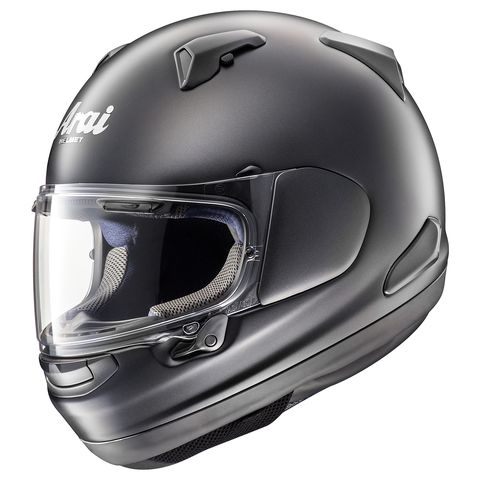
If most helmets press on your forehead, you probably have a long-oval head, and the Signet-X is the go-to fix. It’s Arai’s long-oval shape, sold as the QV-Pro in Europe, with a hand-laid fiberglass and aramid shell. It’s one of very few full-face helmets with a perfect 5-star SHARP score.
Like every Arai, it uses a smooth, rounded shell designed to glance off surfaces in a slide, and it carries DOT and Snell M2020. No sun visor, and Arai pricing, but for the right head shape nothing else fits as well.
Pros: made for long-oval heads; 5-star SHARP; Snell M2020.
Cons: expensive; no sun visor.
5. Arai Regent-X: best-value Arai
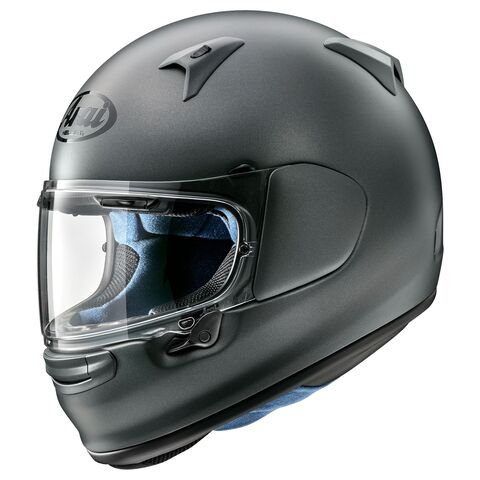
The Regent-X is the most affordable way into an Arai. Its wider shell opening makes it easy to pull on and off, and the Facial Contour System liner holds your cheeks gently for a premium fit. It’s DOT and Snell M2020 certified and comes with a Pinlock-ready Max Vision shield.
Pros: Arai comfort for less; easy to put on; Snell M2020.
Cons: vent controls stiff with gloves; louder and heavier than top-tier sport helmets.

The RPHA 72 updates HJC’s popular RPHA 71 with a revised PIM EVO shell, better airflow and a quieter neck roll. You get an internal sun visor, a Pinlock insert and HJC’s Smart comms compatibility, for noticeably less than a Shoei.
Pros: light shell; sun visor and Pinlock; wide field of view.
Cons: some wind noise at highway speed; comfort liner good rather than luxurious.
7. Shoei Neotec 3: best modular

Now in its third generation, the Neotec 3 is the modular most other modulars are measured against. It’s ECE 22.06 approved in both P (closed) and J (open) positions, so the chin bar is certified as protective. The sun visor drops lower than before, and it’s ready for Shoei’s SRL3 comms with plug-and-play mounting points.
It’s heavier than a full-face, as all modulars are, and a few owners find the faceshield lock stiff at first. Not sure whether you need a modular? Read modular vs full-face helmets.
Pros: P/J dual homologation; tidy integrated comms option; premium fit and finish.
Cons: heavy; expensive; faceshield lock can be stiff.
8. Schuberth C5: quietest modular

Schuberth’s modular is widely rated the quietest flip-up you can buy. It comes pre-wired with an antenna for the SC2 intercom, made with Sena. The DFP fiberglass shell comes in just two sizes, with a carbon version that saves a little weight.
Pros: exceptionally quiet; SC2 comms integration; carbon option.
Cons: only two shell sizes; heavier than most full-face helmets.
9. HJC RPHA 91: best-value modular
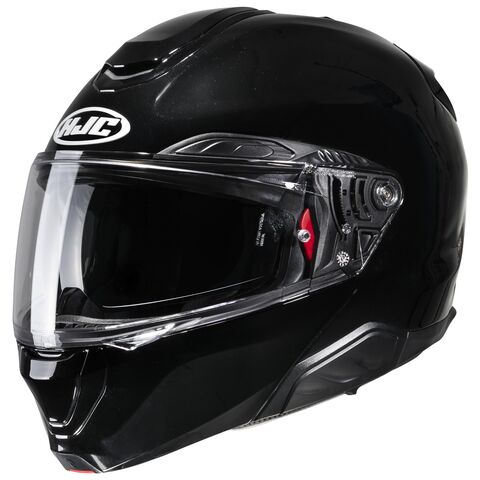
The RPHA 91 brings carbon-aramid construction and premium touches to a lower price. It has a 3-step sun visor, a Pinlock insert in the box, emergency-release cheek pads and Smart HJC speaker pockets. Independent sound tests put it at around 96 dB at highway speed, which is quiet for a modular.
Pros: emergency-release cheek pads; Pinlock included; quiet for a modular.
Cons: chin bar lock fiddly in gloves; not the lightest.
10. Bell Lithium MIPS: best helmet with MIPS
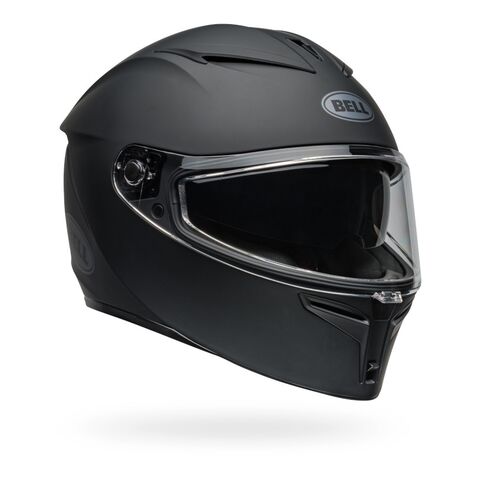
If you want rotational-impact protection without paying premium prices, the Lithium is the pick. A MIPS liner lets the helmet move slightly relative to your head in an angled impact. You also get an internal sun visor, a Pinlock insert and DOT and ECE 22.06 approval. Want to know if MIPS is worth it? Check our helmet safety ratings explained.
Pros: MIPS rotational protection; sun visor and Pinlock; good airflow.
Cons: polycarbonate shell is heavier; some wind noise at speed.
11. Sedici Strada 3: best budget helmet with a sun visor

Sedici is RevZilla’s own brand, and the Strada 3 is a lot of helmet for the money. It has four shell sizes and six EPS sizes for a proper fit, an internal sun visor, and DOT and ECE 22.06 certification, which few helmets at this price carry.
Pros: ECE 22.06 at a budget price; four shell sizes; internal sun visor.
Cons: budget materials and liner; only sold through RevZilla.
12. HJC i10: best under $150
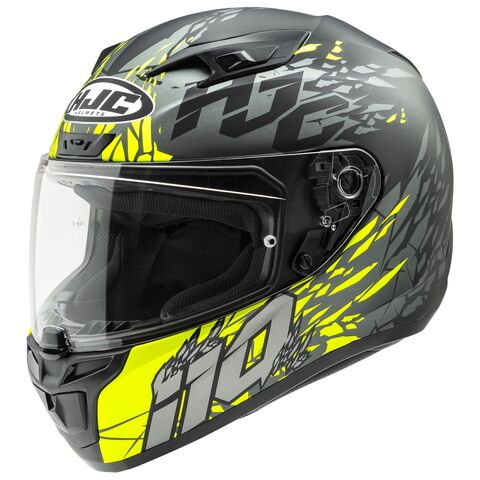
The i10 is the cheapest helmet we’d actually recommend. It’s DOT and Snell M2020 certified, which is unusual at this price, with an intermediate-oval fit that suits most heads. No sun visor and a basic liner, but the protection is the real thing. More cheap options are in our guide to the best motorcycle helmets under $200.
Pros: Snell M2020 for little money; common head shape; lots of graphics.
Cons: no sun visor; heavier polycarbonate shell; noisier than premium helmets.
How to choose a motorcycle helmet
Safety certification
In the US, every road helmet must meet the DOT standard (FMVSS 218). ECE 22.06 is the European standard and tests more impact points, including rotational impacts and the chin bar. Snell is a voluntary, tougher standard that many track days require. A helmet with DOT plus ECE 22.06 or Snell is a safe bet. For more detail, see our guide to helmet safety ratings.
Fit and head shape
A perfectly certified helmet that fits badly won’t protect you properly. Measure your head and work out your head shape: round, intermediate or long oval. Most riders are intermediate oval; Arai’s Signet-X suits long ovals. Our helmet sizing guide walks you through it, and how tight a helmet should be explains the fit test.
Helmet type
Full-face helmets give the most protection. Planning to add comms? See the best motorcycle intercoms before you choose a helmet with speaker pockets. Riding on and off road? See our dual-sport helmet reviews, with airflow compared. Modulars add convenience at fuel stops but weigh more. Adventure helmets add a peak for off-road riding. Compare them in types of motorcycle helmets.
Noise, visor and comms
For long rides, quietness and an internal sun visor matter more than weight. Check for a Pinlock-ready shield to stop fogging (see how to stop your visor fogging) and speaker pockets if you’ll fit an intercom. Our Packtalk Pro vs Sena 60S comparison covers the two top intercoms.
FAQ
How long does a motorcycle helmet last?
The usual advice is to replace a helmet about five years after you buy it, or seven years after its manufacture date, and always after a crash. The EPS foam and liner degrade over time. Our guide to helmet expiration explains why.
Are expensive helmets safer?
Not automatically. A budget helmet with DOT and Snell or ECE 22.06 approval meets the same impact standard as a premium one. Extra money buys lower weight, less noise, better ventilation and comfort features.
Is ECE 22.06 better than DOT?
ECE 22.06 tests more impact points, includes rotational and chin-bar tests, and requires independent batch testing, so many riders treat it as the more thorough standard. In the US a helmet still needs DOT to be road-legal.
Should I buy a modular or a full-face helmet?
Full-face helmets are lighter, quieter and generally stronger. Modulars are more convenient if you wear glasses or stop often. If you choose a modular, look for P/J dual homologation like the Shoei Neotec 3.
Which helmet is quietest?
Among the helmets here, the Shoei RF-1400 and GT-Air 3 are the quietest full-face helmets, and the Schuberth C5 is the quietest modular. Earplugs still make the biggest difference at highway speed.
What is the best motorcycle helmet for glasses wearers?
Of the helmets on this list, the Shoei GT-Air 3 is the best full-face for riders in glasses, and modulars like the Shoei Neotec 3 and Schuberth C5 are the easiest to live with because you can flip the chin bar up and put your glasses on after the helmet. Whatever you pick, look for eyeglass channels or soft temple pockets in the liner and a wide eyeport, and try it on with your own frames. Our guide to the best motorcycle helmets for glasses wearers covers seven picks and how to check fit with glasses on.
What is the best breathable motorcycle helmet?
The AGV K6 S is the most breathable helmet here, with excellent ventilation in a very light shell. If you want a well-ventilated touring helmet with a sun visor, pick the Shoei GT-Air 3. On a smaller budget, the HJC RPHA 72 and Bell Lithium MIPS also have good airflow. Vents you can open and close in gloves matter as much as how many there are. Riding off road too? Our dual-sport helmets guide compares airflow and venting.
What is the safest motorcycle helmet?
The safest motorcycle helmet is one that fits your head properly and carries DOT plus ECE 22.06 or Snell M2020. For crash-test results, the UK government’s SHARP programme rates helmets from one to five stars. On this list the Shoei GT-Air 3, AGV K6 S and Arai Signet-X all score five stars. A five-star helmet in the wrong size protects you less than a well-fitted one, so measure your head first.
What are the top motorcycle helmet brands?
Shoei, Arai, AGV, Schuberth, HJC and Bell make most of the helmets on this list, with Sedici at the budget end. Every big brand sells helmets at several price and safety levels, so compare the certification and fit of the specific model, not just the badge. For a brand-by-brand breakdown, see our best motorcycle helmet brands guide.
If you want comms built in from the factory, see our picks for the best Bluetooth motorcycle helmets.
Our verdict
For most riders, the Shoei GT-Air 3 is the best motorcycle helmet you can buy: quiet, well equipped and top-rated for safety. Sport riders should try the AGV K6 S, modular fans the Shoei Neotec 3, and if money is tight, the HJC i10 gives you Snell protection for very little. Whatever you choose, get the fit right first.
Browse all our helmet guides.