Throttle Buff is reader-supported: we may earn a commission when you buy through links on this page. Read our affiliate disclosure.
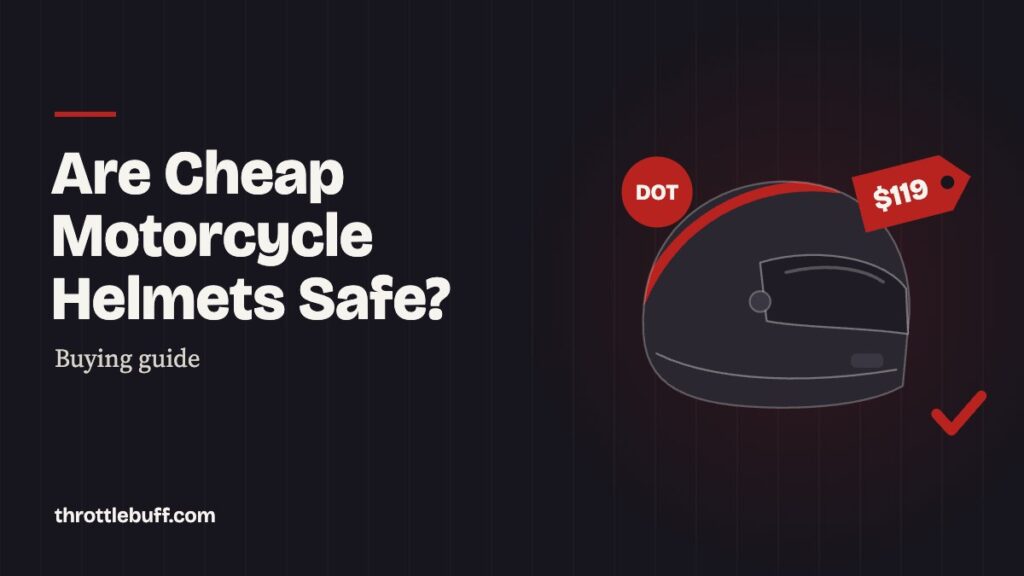
Are cheap motorcycle helmets safe? Yes, as long as the helmet is genuinely certified and fits your head. A $120 helmet has to pass the same US DOT standard as an $800 one, and some budget models pass Snell or ECE 22.06 as well. The helmets that are not safe are uncertified “novelty” lids and fakes, which are often cheap but are a different product altogether.
So the real question is not price but proof. Below is how the standards work, what a cheap helmet gives up, the five checks that separate a safe budget helmet from a dangerous one, and four helmets around $120 to $240 that pass them, with prices checked at RevZilla in November 2026.
Cheap helmet or unsafe helmet? Five checks
| Check | A safe budget helmet | Walk away if |
|---|---|---|
| DOT label | Permanent label with brand, model, DOT and FMVSS No. 218 CERTIFIED | There is no label, or it is a loose sticker |
| Weight | About 3 lb | It weighs 1 lb or less |
| Inner liner | Thick polystyrene foam under the comfort pads | Only soft padding, or no liner at all |
| Chin strap | Sturdy strap with solid rivets | Thin strap or a flimsy clip |
| Fit | Snug all round, no hot spots, does not roll off | It moves when you shake your head |
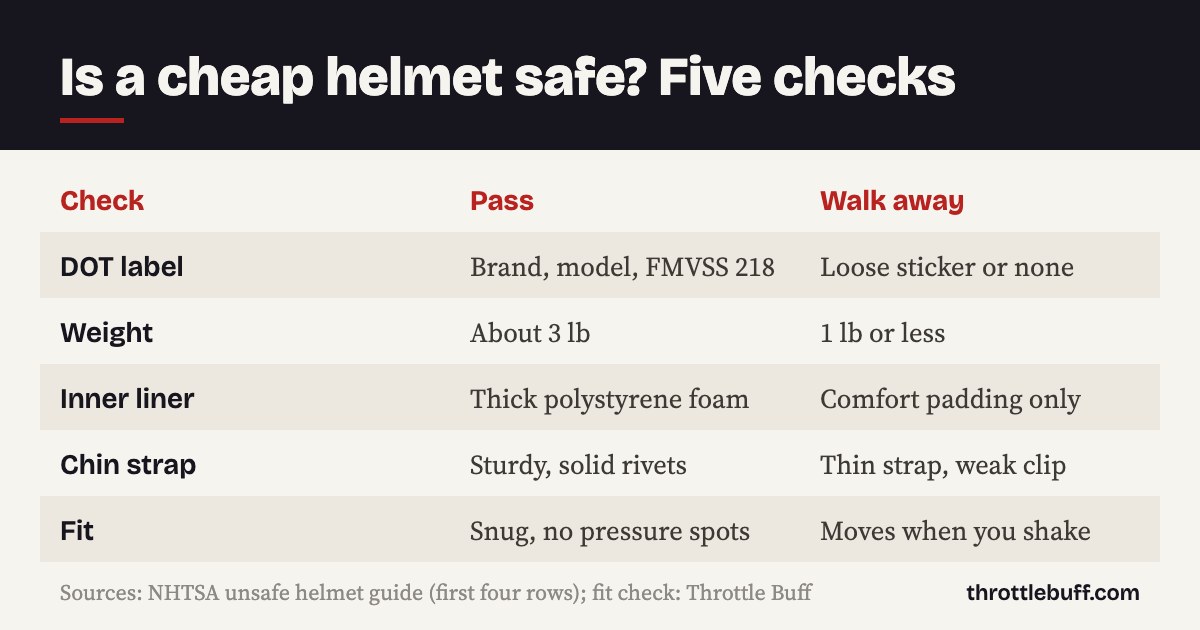
The first four checks come from NHTSA’s guide, How to Identify Unsafe Motorcycle Helmets. NHTSA also notes it has never seen a full-face novelty helmet, so a full-face design from a known brand is already a good sign. For a closer look at the label itself, see how to tell if a helmet is DOT approved.
Why a cheap motorcycle helmet can be just as safe
Every helmet sold for road use in the US must meet FMVSS 218, the DOT standard. Makers certify their own helmets, and NHTSA buys helmets off the shelf and tests them for compliance. The standard does not have a cheaper tier: a budget helmet that carries a genuine DOT label has been built to meet the same impact, penetration and retention tests as a premium one.
Some cheap helmets go further. Snell is a voluntary standard with its own testing, and ECE 22.06, used in Europe and much of the world, adds rotational impact tests. You can find both on helmets under $250. Our ECE 22.06 vs DOT explainer covers what each one tests.
Independent crash testing points the same way. The UK government’s SHARP scheme rates helmets from one to five stars, and its own guidance says there is no connection between star rating and price: a budget helmet can earn four or five stars and an expensive one can score low. More on how to read those scores in our helmet safety ratings guide.
What you give up with a budget helmet
The money in a premium helmet mostly goes to things you feel on every ride rather than to crash protection:
- Weight. Budget shells are polycarbonate. Fiberglass and carbon shells save a few ounces, which matters on long days.
- Noise. Cheaper helmets are usually louder at highway speed. Wear earplugs either way.
- Shell sizes. A budget model may stretch one or two shells across every size, so small heads can end up in a bulky shell. Check the shell size range before you buy.
- Venting, visors and comfort. Fewer vents, a basic clear shield, simpler liners and fewer pad options to tune the fit.
None of that makes the helmet less safe in a crash. A poor fit can, though, so fit matters more than the price tag. Our guide on how to size and buy a helmet walks through measuring your head.
When a cheap helmet is not safe
Novelty helmets
These are thin shells, often under $60, sold for looks. NHTSA says they may weigh a pound or less and have only soft padding instead of a foam liner. Some sellers ship a DOT sticker separately for the rider to apply, which makes it invalid.
Fakes and unknown online brands
Counterfeits of big-name helmets turn up on marketplace sites at prices that look too good. If the seller is not an authorized dealer and the label does not name a real manufacturer and model, skip it.
Used and old helmets
A cheap used helmet may have taken a hit you cannot see, because the foam liner crushes once and does not recover. Buy new, and replace any helmet that has been in a crash. Our guide to helmet expiration explains when age alone is a reason to replace one.
Budget helmets that pass the checks
All four are full-face helmets from established brands, sold new at RevZilla. Certifications and weights below are from the RevZilla listings.
| Helmet | Price | Certification | Listed weight |
|---|---|---|---|
| HJC C10 | $119.99 | DOT | Not listed |
| Bell Qualifier | $119.95 | DOT | 3.28 lb |
| Scorpion EXO-R430 | $174.95 | DOT, Snell M2025 | 3.62 lb |
| Bell Lithium MIPS | $239.95 | DOT, ECE 22.06, MIPS | 3.81 lb |
HJC C10: $119.99

The C10 is one of the cheapest full-face helmets from a major brand. RevZilla lists it as DOT approved, with a polycarbonate composite shell, removable washable pads and speaker pockets for an intercom. It is a good example of a cheap helmet done properly: no flashy extras, but a real shell, a real liner and a label that names the maker and model.
Bell Qualifier: $119.95

The Qualifier is DOT approved and weighs a listed 3.28 lb, right where NHTSA says a compliant helmet should be. Bell backs it with a five year warranty. Owners mention wind noise at highway speed, which is the kind of trade-off you accept at this price, not a safety gap. Our Bell Qualifier review covers it in more detail.
Scorpion EXO-R430: $174.95
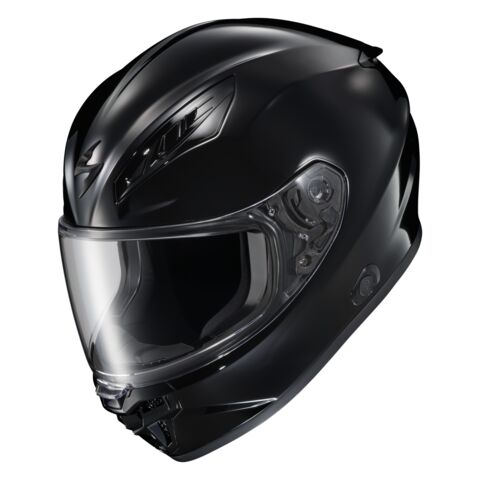
The EXO-R430 shows how far a budget helmet can go. It carries DOT certification and Snell M2025 in sizes XS to 2XL, a voluntary standard that many far pricier helmets do not bother with. Listed weight is 3.62 lb.
Bell Lithium MIPS: $239.95

Spend a little more and you get both DOT and ECE 22.06, plus a MIPS slip layer aimed at rotational forces, a Pinlock anti-fog insert and a listed 3.81 lb weight. It is our top pick in the best beginner helmets guide for that reason: it is still affordable, but it adds the newer test regime.
Want more options at the bottom of the range? See our best helmets under $100, and for help setting a budget read how much to spend on a motorcycle helmet.

FAQ
Are more expensive motorcycle helmets safer?
Not reliably. All road helmets in the US must pass the same DOT test, and SHARP’s crash testing finds no link between price and star rating. Extra money buys lower weight, less noise and more features.
What is the safest budget motorcycle helmet?
Look for a full-face helmet that adds a second standard on top of DOT, such as Snell or ECE 22.06. The Scorpion EXO-R430 (Snell M2025) and Bell Lithium MIPS (ECE 22.06) both do that for under $250.
Is a $100 motorcycle helmet safe?
It can be, if it has a genuine DOT label from a real manufacturer and fits well. Below about $60 you are more likely to find novelty helmets, so check the label, weight and liner carefully.
Are cheap helmets from Amazon safe?
Ones from known brands sold by the brand or an authorized dealer are the same helmets you would find in a shop. Be wary of unknown brands with no maker or model on the DOT label, and of big-name helmets at prices far below retail.
Is MIPS worth paying more for?
MIPS is a slip layer meant to reduce rotational forces in some impacts. It is a reasonable upgrade if the helmet fits you, but a well-fitting certified helmet without it is still a safe choice.
Verdict
A cheap motorcycle helmet is safe when it is a certified full-face helmet from a real brand that fits you snugly. Price buys comfort, quiet and low weight, not a different safety test. Spend your money on the fit first, and if you can stretch a little, pick a budget helmet that adds Snell or ECE 22.06 on top of DOT.
Browse all our helmet guides.