Throttle Buff is reader-supported: we may earn a commission when you buy through links on this page. Read our affiliate disclosure.
To ride a motorcycle on gravel, slow down before you reach it, keep a light grip, look far ahead and make every input smooth: gentle throttle, gentle brakes, no sudden steering. Stay loose, keep the bike upright, and let it move around a little underneath you rather than fighting it.
Gravel feels scary on a street bike because the front tire squirms and the rear can step out under power. Most of that movement is normal. Problems start when a rider tenses up, grabs the front brake or chops the throttle. The tips below apply to gravel roads, loose gravel on a corner and gravel driveways, on any type of bike.
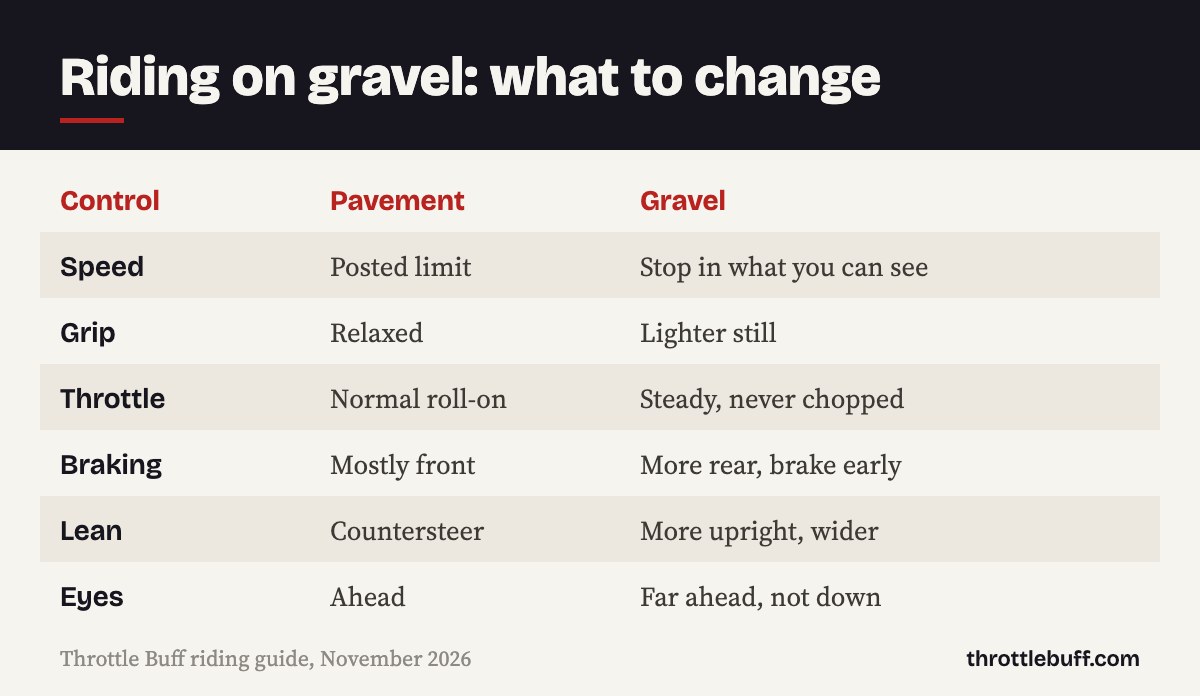
What changes on gravel
| Control | On pavement | On gravel |
|---|---|---|
| Speed | Posted limit | Well below it, so you can stop in the distance you can see |
| Grip on the bars | Relaxed | Even lighter, so the front can find its own line |
| Throttle | Normal roll-on | Steady and gentle, never chopped mid-turn |
| Braking | Front does most of the work | More rear, smooth front, done before the turn |
| Steering | Lean and countersteer | Keep the bike more upright, turn wider |
| Eyes | Ahead | Farther ahead, never at the gravel by your front wheel |
How to ride a motorcycle on gravel roads: 9 tips
1. Slow down before the gravel starts
Do your braking on pavement, while you still have full grip. Enter gravel at a speed that lets you stop well inside the distance you can see. On a gravel road, ruts, washboard and deeper patches can appear with little warning, so ride slower than feels necessary until you know the surface.
2. Relax your grip and your arms
The front wheel will wander a few inches as it rolls over stones. A death grip turns that wander into a wobble, because every twitch in the tire goes straight into your stiff arms and back into the bars. Hold the bars as you would hold a bird: firmly enough to control, loosely enough to let the front track. Keep your elbows bent and grip the tank with your knees.
3. Look where you want to go
The bike follows your eyes. Look far down the road and through the turn, not at the loose stuff in front of your wheel. Scan for the smoothest line, usually the packed tracks left by car tires, and aim for those.
4. Keep the throttle steady
A steady, light throttle keeps weight on the rear and stabilizes the bike. Rolling off suddenly pitches weight onto the front tire, which is the one you least want to overload on gravel. If you need more speed, roll on gradually; a sudden handful can spin the rear.
5. Use smoother, earlier braking
On loose surfaces, the front tire can tuck if you squeeze hard. Use more rear brake than usual, add the front progressively, and keep the bike straight while braking. ABS helps, but it can lengthen stopping distances on loose gravel, so leave extra room. Save trail braking for pavement.
6. Choose a gear that keeps the engine smooth
One gear higher than you would use on pavement often helps, because it softens throttle response and makes wheelspin less likely. Avoid lugging the engine so low that it jerks, and pull in the clutch slightly if you need to creep through a deep patch at walking pace.
7. Corner upright and wide
Take a wider, slower line and keep the bike more upright than you would on asphalt. Off-road riders weight the outside footpeg and lean the bike under them while their body stays upright. On a street bike, simply keeping lean angle low and speed down does most of the work. Our cornering guide covers lines and vision.
8. Stand on the pegs when it gets rough
On a dual sport or adventure bike, standing lowers the center of gravity to the pegs and lets the bike move under you. Stand with knees bent, arms loose and head over the bars. Most cruisers and sport bikes aren’t set up for it, so stay seated, keep weight on the pegs and stay loose.
9. Handle loose gravel on a corner calmly
Gravel spread across a paved corner is the classic trap. If you see it early, brake on clean pavement, straighten up while crossing the gravel, and lean again once you are past it. Most patches are only a few feet wide, so the moment passes quickly if you stay calm. If you are already in it, avoid sudden inputs, keep a light throttle and look to your exit.
Set the bike up for gravel
Tires
Street tires work on gravel at sensible speeds, but dual sport tires give far more bite. Our tire ratio guide explains the trade-off between road and dirt grip. Some adventure riders lower pressures for long gravel stretches; follow your tire and bike maker’s guidance, and reinflate before you return to pavement.
Gear
A fall on gravel is usually slow but rough. Wear full gear, and ankle-supporting riding boots, because a foot that slips off a peg or dabs on loose ground takes a beating.
Gravel driveways
Ride in slowly in a low gear, keep the bars straight, and park on firm ground. A kickstand puck or flat plate stops the stand sinking.

FAQ
Can you ride a street motorcycle on gravel?
Yes. Slow down, keep inputs smooth and keep the bike upright. Street tires have less grip, so expect more movement and leave more room to stop.
How do you ride a motorcycle on loose gravel?
Lighter grip, steady throttle, more rear brake and eyes far ahead. Don’t fight the small slides; they usually sort themselves out if you stay relaxed.
Should you stand up when riding on gravel?
On an adventure or dual sport bike, standing helps on rough or long sections. On a cruiser or sport bike, stay seated and loose.
How fast can you ride a motorcycle on gravel?
There’s no single number. Ride at a speed that lets you stop in the distance you can see, and slower on loose, deep or rutted patches.
Is it OK to use the front brake on gravel?
Yes, gently. Squeeze it progressively with the bike upright, and add more rear brake than you would on pavement.
Verdict
Learning how to ride a motorcycle on gravel comes down to speed, smoothness and vision: slow down first, stay loose, look ahead and let the bike move. Practice on an empty gravel lot before you need the skill on a real road. A course from the Motorcycle Safety Foundation is a good next step, and NHTSA has more safety advice. If you are new to riding, read our beginner mistakes guide and riding in the rain guide next.
Browse all our how-to and safety guides.