Throttle Buff is reader-supported: we may earn a commission when you buy through links on this page. Read our affiliate disclosure.
How we chose: this guide is research-based, built from manufacturer specifications, safety certifications and owner feedback rather than hands-on testing. How we research.
The best leather motorcycle jacket for most riders is the REV’IT! Ignition 4 H2O. It has an EN 17092 Class AA rating, CE Level 2 shoulder and elbow armor, and removable thermal and waterproof liners, so one jacket covers spring through fall. If you ride mostly in summer heat, get the Alpinestars GP Plus R V4 Airflow. If you’re on a budget, the Icon Overlord 3 Leather comes with a back protector for about $275.
Quick picks
-
Best overall
- Best for
- Three-season riding
- EN 17092 class
- AA
- Price
- $619.99 MSRP
-
Best for hot weather
Alpinestars GP Plus R V4 Airflow
- Best for
- Hot weather
- EN 17092 class
- AA
- Price
- $629.95 MSRP
-
Best for sport and track days
- Best for
- Sport and track days
- EN 17092 class
- AA
- Price
- $649 MSRP
-
Best classic style
- Best for
- Classic and café style
- EN 17092 class
- AA
- Price
- $459.95 MSRP
- Best for women: Alpinestars Stella Faster V3
- Best budget: Icon Overlord 3 Leather
Leather still beats textile for abrasion resistance at a given weight, but a fashion jacket off a clothing rack won’t protect you. Every jacket on this list is a real riding jacket with impact armor and a CE garment rating. Brands keep refining their lines, so the 2020-era picks this page used to recommend are mostly gone. Here’s what to buy now.
Leather motorcycle jackets compared
| Jacket | Best for | EN 17092 class | Armor included | Back protector | Price |
|---|---|---|---|---|---|
| REV’IT! Ignition 4 H2O | Three-season riding | AA | SEEFLEX Level 2 shoulders and elbows | Optional | $619.99 MSRP |
| Alpinestars GP Plus R V4 Airflow | Hot weather | AA | Nucleon Flex Plus shoulders, GP Lite elbows | Optional | $629.95 MSRP |
| Dainese Racing 5 | Sport and track days | AA | Composite Level 2 shoulders and elbows | Optional | $649 MSRP |
| Merlin Alton II D3O | Classic and café style | AA | D3O LP1 shoulders and elbows | Optional | $459.95 MSRP |
| Alpinestars Stella Faster V3 | Women’s sport fit | A | Nucleon Flex Plus shoulders, GP Lite elbows | Optional | $514.95 MSRP |
| Icon Overlord 3 Leather | Budget | A | D3O T5 Evo Level 1 shoulders and elbows | Included (D3O Viper) | $275 |
The best leather motorcycle jackets in 2026
1. REV’IT! Ignition 4 H2O: best overall

The Ignition 4 H2O mixes cowhide with PWR|Shell mesh panels and stretch zones, and it comes with two liners: a removable hydratex|Lite waterproof liner and a removable thermal liner. With both in, it’s a cool-weather jacket. With both out and the front, arm and back vents open, it rides fine on warm days. REV’IT! certifies it to EN 17092 Class AA and fits SEEFLEX CE Level 2 armor at the shoulders and elbows.
The fit is slim and sporty, and there are short and long zips to connect matching pants. Two things to know: the jacket is only waterproof with the liner zipped in, and the back protector is sold separately. Australia’s independent MotoCAP lab gave it four stars for protection, with a strong impact score.
Pros: one jacket covers three seasons; Level 2 armor at the shoulders and elbows; connects to pants.
Cons: waterproofing depends on the inner liner, which traps heat; back protector costs extra.
2. Alpinestars GP Plus R V4 Airflow: best for hot weather

Plenty of leather jackets claim to be vented. This one is built for summer: 1.3mm race-grade leather, perforation across the chest and sides, and vented shoulders, all Class AA certified. Armor is Nucleon Flex Plus at the shoulders and GP Lite at the elbows, and there are pockets for back and chest pads. It’s also ready for Alpinestars’ Tech-Air 3 and Tech-Air 5 airbag vests, which matters if you plan to upgrade.
The cut is sport-oriented, with pre-curved arms and a longer back, so it feels best on a sportbike or naked bike. Reviewers like the airflow on hot days. The flip side is that there’s no thermal liner, so you’ll need a base layer once temperatures drop into the 60s.
Pros: excellent airflow for leather; airbag-ready; race-grade hide.
Cons: no thermal liner; back and chest protectors cost extra.
3. Dainese Racing 5: best for sport and track days
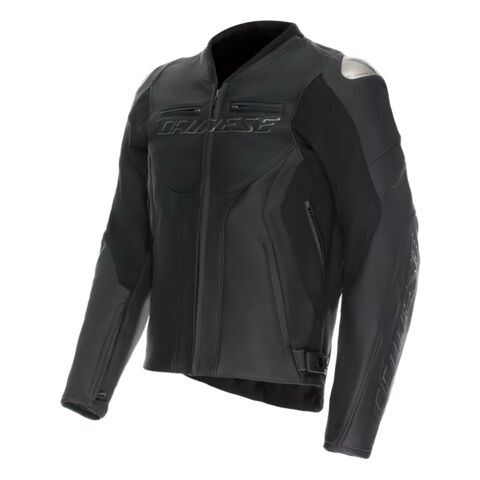
The Racing 5 replaces the long-running Racing 4, and the update is a real improvement. It uses 1.2mm Tutu cowhide, composite CE Level 2 armor at the shoulders and elbows, and aluminum shoulder inserts. It’s rated Class AA, and the US version is compatible with Dainese’s Smart Air airbag system.
MotoCAP gave the perforated Racing 5 four stars, with high abrasion and burst scores and a much better impact score than the Racing 4. Thermal comfort scored low, so don’t expect it to stay cool in traffic. Fit is “regular and sporty,” with waist and hip adjusters. A perforated version is available if you ride in the heat.
Pros: strong abrasion and impact results; Level 2 armor; Smart Air compatible.
Cons: runs warm; back protector sold separately; some sizes sell out.
4. Merlin Alton II D3O: best classic style

If you ride a cruiser, café racer or modern classic and don’t want race stripes, the Alton II is the one to get. It’s cut from soft 1.2–1.3mm aniline leather, comes in black or brown, and looks like a jacket you’d wear off the bike. It also has proper protection: D3O LP1 armor at the shoulders and elbows (the elbow position adjusts) and a Class AA rating.
For the second version, Merlin lengthened the back and lowered the front neckline to stop it rubbing. You get two front and three rear zipped vents, a fixed mesh liner and a removable thermal liner. A hands-on review from an Australian summer praised its comfort and build quality (YKK zips, good adjusters) for the price. The main gap is that the D3O back protector isn’t included.
Pros: classic look with Class AA protection; very comfortable leather; good value.
Cons: no back protector; waterproofing not stated.
5. Alpinestars Stella Faster V3: best for women

Unisex sizing rarely fits well, and a jacket that shifts in a crash puts the armor in the wrong place. The Stella Faster V3 has a women’s sport cut with pre-curved arms, a longer back and a hook waist adjuster, in EU sizes 38 to 50. It has stretch inserts across the chest, back and arms, Nucleon Flex Plus shoulder armor, GP Lite elbow armor, and external shoulder sliders.
It’s certified Class A, not AA, which reflects its lighter street-sport role. The fixed mesh liner and side torso vents favor warm weather, and the jacket is not waterproof. It works with Tech-Air 3 and Tech-Air 5, and it zips to Alpinestars pants. Plan to add the Nucleon back insert.
Pros: women’s-specific sport fit; airbag-ready; lighter price than most AA jackets.
Cons: Class A only; back and chest protectors sold separately; not waterproof.
For more options, including textile jackets, see our women’s motorcycle jackets with armor guide.
6. Icon Overlord 3 Leather: best budget

At around $275, the Overlord 3 is the cheapest jacket here, and it’s the only one that comes with a back protector (D3O Viper Level 1), on top of D3O T5 Evo Level 1 shoulder and elbow armor. It combines TracSpec top-grain cowhide with 300D polyester panels, so it’s a leather-textile hybrid. That’s how Icon keeps the price and weight down.
It’s rated Class A. Venting is good, with laser perforation, a mesh front panel, and chest and back vents, and there’s a removable insulated vest for cooler mornings. The sport fit runs snug, and the styling is loud. RevZilla has it marked as closeout, so buy soon if you want one.
Pros: complete D3O armor set, including the back; good airflow; low price.
Cons: part textile; Class A only; aggressive styling won’t suit everyone.
How to choose a leather motorcycle jacket
Check the EN 17092 class
EN 17092 is the European standard for protective riding garments. It tests the whole jacket for abrasion, seam strength and tear resistance, then gives it a class: AAA (highest), AA, A, or B and C for special cases. The Belgian test lab Centexbel explains the classes in more detail. For street riding, AA is a good target. A is acceptable for lighter, warm-weather jackets. A label that just says “CE armor” refers to the pads, not the jacket.
Armor: Level 1 vs Level 2, and the back
Impact protectors are rated Level 1 or Level 2 under EN 1621. Level 2 lets less force through but is usually thicker. Most premium jackets still ship without a back protector, which is the cheapest big safety upgrade you can make. Our guides to motorcycle back protectors and motorcycle armor cover the inserts that fit these jackets.
Leather type and thickness
Riding jackets mostly use cowhide around 1.1–1.4mm thick. Race-grade hides sit at the top of that range. Thinner aniline or full-grain leather feels softer and breaks in faster. Kangaroo is lighter and stronger for its weight, but it’s mostly found in race suits. Hybrids like the Overlord mix leather with textile to cut cost and weight. If you’re still deciding between materials, read our textile vs mesh vs leather breakdown.
Ventilation and liners
Leather doesn’t breathe much. If you ride in the heat, look for perforated panels or zip vents. For cold or wet riding, removable thermal and waterproof liners stretch the season, though a dedicated winter motorcycle jacket will be warmer and drier.
Fit
Try it on in a riding crouch. The armor should sit over your elbows with your arms reaching for the bars, and the back shouldn’t ride up. Sport cuts feel tight standing up; that’s normal. Sizes vary between brands, so check each size chart rather than assuming your usual size. Get gloves that overlap the cuffs.
Want luggage to match? Our motorcycle saddlebags guide includes top-rated leather bags and how to care for them.
Finishing the cruiser look? Our guide to the best cruiser motorcycle boots covers waterproof engineer and lace-up boots that match a leather jacket.
FAQ
Are leather motorcycle jackets safer than textile?
Good leather resists abrasion very well, but certification matters more than material. A Class AA textile jacket can protect better than an unrated leather fashion jacket. Compare the EN 17092 class and the armor, not just the material. NHTSA recommends that riders fully cover their arms and legs with leather or other heavy material.
How much should I spend on a leather motorcycle jacket?
A certified jacket with armor starts around $275 and goes up to $650 or more for premium sport models. Budget for a back protector too if it’s not included. Our guide on how much to spend on motorcycle gear breaks down a full kit.
Do leather motorcycle jackets need a break-in period?
Yes, a little. Thicker, stiffer hides take a few rides to loosen up at the elbows and shoulders. Buy the size that fits snugly in a riding position, not one that feels loose standing up, because leather stretches slightly over time.
Can I wear a leather jacket in the rain?
Most leather jackets aren’t waterproof on their own. Jackets like the Ignition 4 H2O add a waterproof liner. Otherwise, wear a rain shell over the jacket and treat the leather with a conditioner after it gets soaked.
Is an airbag-ready leather jacket worth it?
If you might buy an airbag vest later, yes. Tech-Air- and Smart Air-ready jackets let you add one without buying a new jacket. Our motorcycle airbag vests and jackets guide covers the systems available.
Verdict
For most riders, the REV’IT! Ignition 4 H2O is the leather jacket to buy: Class AA, Level 2 armor and two liners that make it usable most of the year. Summer riders should go for the Alpinestars GP Plus R V4 Airflow, track-day riders the Dainese Racing 5, and anyone after a classic look the Merlin Alton II. On a tight budget, the Icon Overlord 3 gives you the most complete armor set for the money. Whichever you choose, add a back protector and pair it with a good helmet. Browse all styles, including textile and mesh, in our best motorcycle jackets roundup.
Browse all our riding gear guides.