Throttle Buff is reader-supported: we may earn a commission when you buy through links on this page. Read our affiliate disclosure.
The best way to store a motorcycle helmet is clean, fully dry, in a breathable cloth bag, sitting base down on a stable shelf in a cool, shaded room. Keep it away from heat, direct sun, fuel and solvents, and never hang it on a mirror or handlebar, because Snell warns that hard points can damage the foam liner inside.
That liner is the reason storage matters. It is the part that absorbs an impact, and it can be harmed by heat, chemicals and pressure without the damage showing. Here is where the helmet makers and Snell draw the lines, for a night at home, a stop on the road and a winter in the closet.
Where not to store a motorcycle helmet
| Keep it away from | Why | Who says so |
|---|---|---|
| Hot, closed spaces such as a car’s rear shelf, and hot parts such as an exhaust | Makers warn against excessive heat and strong sunlight in an enclosed area | Arai, Snell |
| Direct sunlight | Paint fades with exposure, fluorescent colors most of all | Arai, Shoei |
| Petrol, thinners, solvents and chemical cleaners | They can damage the liner and plastic parts without visible signs | Arai, Shoei, DOT label |
| Mirrors, handlebars and other hard points | They can damage the inner foam liner | Snell |
| A closed bag while the lining is still damp | Helmet and pads should dry at room temperature first | Arai, Shoei |
| High or unstable perches | Dropping onto a hard surface can damage the paint or reduce protection | Arai |
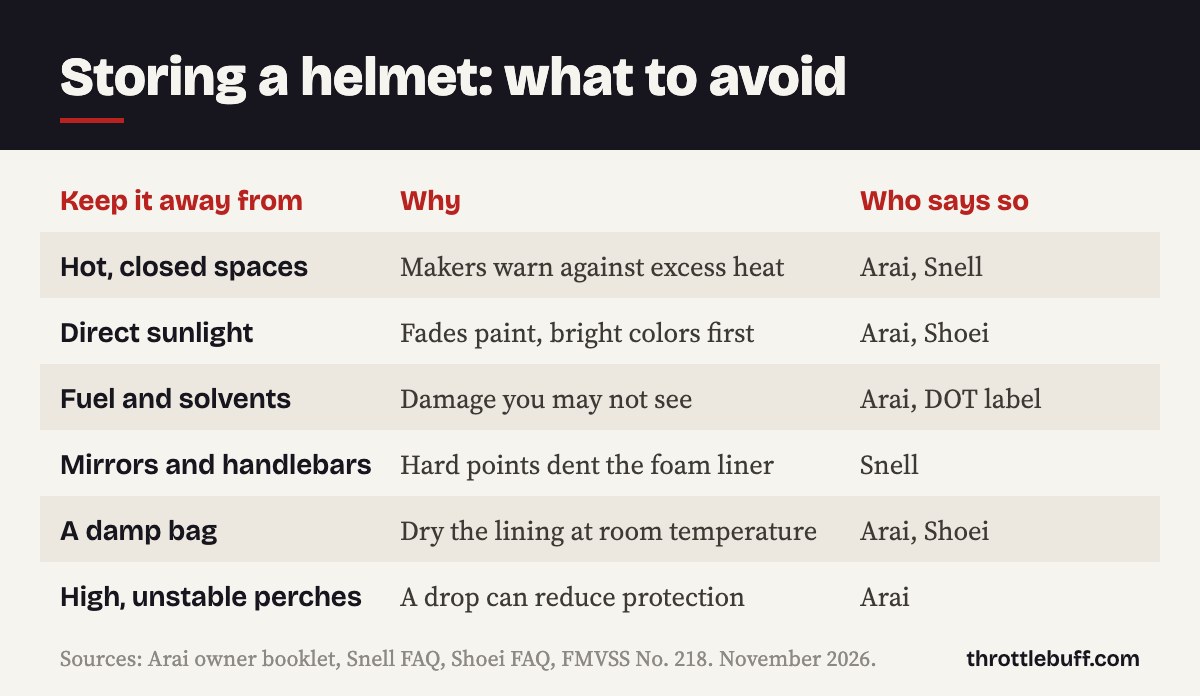
These points come from Arai’s owner booklet, the Snell Foundation FAQ and Shoei’s product FAQ, read in November 2026. The US DOT standard also requires every helmet to carry a label warning that it “can be seriously damaged by some common substances without damage being visible to the user”.
How to store a motorcycle helmet at home
1. Let it dry first
After a ride the lining holds sweat and, some days, rain. Arai says to dry the helmet and shield at room temperature and never expose them to excessive heat. Shoei says the same about cheek pads and liners: let them dry naturally, without a hair dryer or tumble dryer. Leave the helmet in open air for a few hours before it goes into a bag or cupboard. If it already smells, wash the lining using our helmet cleaning tips.
2. Use the cloth bag
Many helmets come with a soft cloth bag, and Arai lists one among the items packed with every genuine helmet. It keeps dust off and stops the shell and shield picking up scratches from whatever is next to it. A cloth bag also lets air through, which a sealed plastic bag does not.
3. Give it a shelf, base down
Set the helmet on its base on a flat, stable surface, low enough that a knock will not send it to the floor. A closet shelf in a room you live in is ideal: cool, dry and out of the sun. If you hang it, use a wide, rounded helmet hanger, not a narrow hook that presses into the liner.
4. Keep it clear of the garage hazards
A garage is where fuel, thinners, brake cleaner and summer heat all live. Arai says never to use petrol, thinner, benzene or other solvents on a helmet because they can affect the EPS liner and plastic parts, so keep the helmet well away from where those are stored and used. If the garage gets hot, bring the helmet indoors.
Storing a helmet on the bike when parked
The mirror is the classic helmet hook, and Snell names it directly: keep the helmet away from hard objects such as a motorcycle mirror or handlebar, which can damage the inner foam liner. Snell also says to keep it away from high heat such as the muffler.
The seat is the usual alternative, but a helmet can roll off it. Snell’s view is that a helmet dropped from your hand or the seat does not normally need replacing, while Arai warns that dropping it onto solid surfaces may damage the paint or decrease its ability to protect. The safest spot is a top case, or a lock that holds the helmet by the chin strap D-rings so it hangs without resting on a hard edge. Our best motorcycle helmet locks guide covers the options, and why helmets break on impact explains what a drop can and cannot do.
Long-term and winter storage
For a helmet that will sit for months, wash and dry the lining first, wipe the shell with mild soap and water, bag it and shelve it indoors. A dry room is better than a damp shed. Before the first ride of the season, check the strap, the shield mechanism and the liner, and refresh the anti-fog steps in our guide to stopping visor fogging.
Storage does not stop the clock completely, but it helps. Snell recommends replacing a helmet after five years of normal use and adds that unused helmets stored in good condition do not automatically expire after five years. Arai counts its five years from first use. Our helmet expiration guide shows how to find your helmet’s build date. A spare lid kept for guests deserves the same care as your own, and our passenger helmet guide can help if it is due for replacement.

FAQ
What is the best way to store a motorcycle helmet?
Dry, in its cloth bag, base down on a stable shelf in a cool, shaded room, away from fuel, solvents and heat.
Is it bad to hang a helmet on a motorcycle mirror?
Yes. Snell says hard objects such as a mirror or handlebar can damage the inner foam liner. Use a helmet lock or a top case instead.
Can I leave my helmet in a hot car?
Avoid it. Arai says never to subject a helmet to strong sunlight in an enclosed area, and gives the back shelf of a car as its example.
Should I store my helmet in a bag?
Yes, once it is dry. A soft cloth bag keeps dust and scratches off. Do not seal a damp helmet in plastic.
How long can you keep a stored helmet?
Snell says unused helmets stored in good condition do not automatically expire after five years, but it recommends replacing a helmet after five years of normal use. Check your maker’s advice as well.
How do I keep a stored helmet from smelling?
Let the lining dry at room temperature after every ride and wash the removable pads from time to time. Smell comes from damp padding shut away too soon.
Verdict
Storing a helmet well costs nothing: dry it, bag it, shelve it somewhere cool and shaded, and keep it off the mirror. The habits that hurt a helmet are the convenient ones, such as the mirror, the hot car and the garage shelf next to the fuel can. If yours has had a hard life already, our best motorcycle helmets guide lists current replacements.
Browse all our helmet guides.