
Throttle Buff is reader-supported: we may earn a commission when you buy through links on this page. Read our affiliate disclosure.
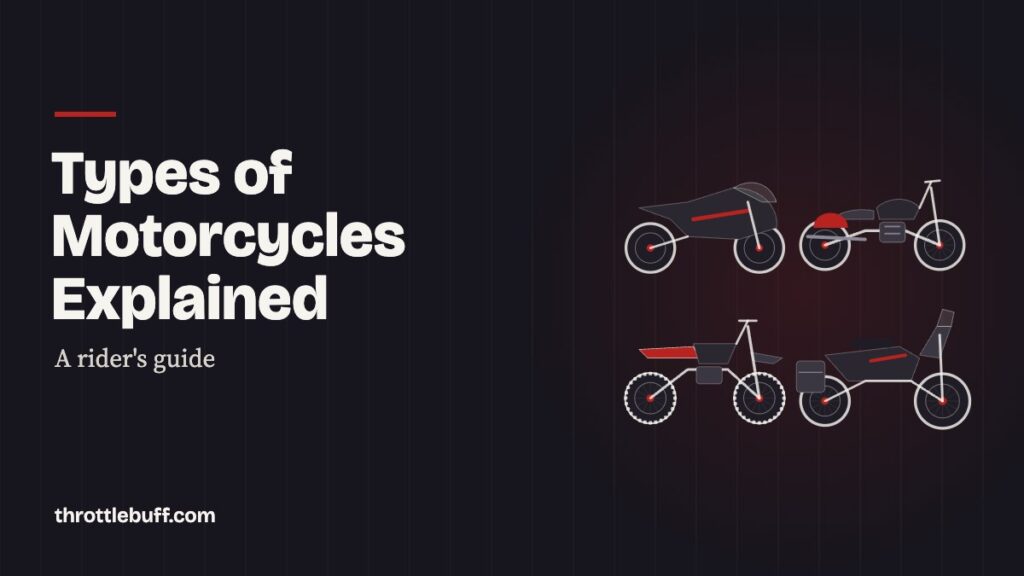
The main types of motorcycles are standard (naked), sport, sport-touring, touring, cruiser, adventure (ADV), dual-sport, off-road (dirt), scooters and electric bikes. Each suits a different kind of riding, from commuting and canyon carving to long-distance touring and trails.
Gear for each type
Match your helmet to your bike: see types of motorcycle helmets, dual-sport helmets and helmets for cruisers. For licensing and training, see the MSF.

Motorcycle types compared
| Type | Riding position | Best for | Examples |
|---|---|---|---|
| Standard / naked | Upright | Everyday riding, beginners | Yamaha MT-07, Kawasaki Z650, KTM Duke |
| Sport | Leaned forward | Speed, track days | Yamaha R7, Honda CBR650R |
| Cruiser | Relaxed, feet forward | Relaxed road riding | Harley-Davidson Softail, Honda Rebel |
| Touring | Upright, roomy | Long trips, two-up | Honda Gold Wing, BMW R 1250 RT |
| Sport-touring | Slightly forward | Fast long-distance riding | Kawasaki Ninja 1000SX |
| Adventure | Upright, tall | Mixed roads and gravel | BMW R 1300 GS, Yamaha Ténéré 700 |
| Dual-sport | Upright, light | Trails and roads | Suzuki DR650, Honda CRF300L |
| Dirt / motocross | Standing | Off-road only | KTM SX, Yamaha YZ |
| Scooter | Step-through | City commuting | Honda PCX, Vespa |
| Type | Riding position | Best for | Examples |
|---|---|---|---|
| Standard / naked | Upright | Commuting, all-round | Yamaha MT-07, Kawasaki Z650 |
| Sport | Leaned forward | Fast roads, track | Yamaha R7, Honda CBR600RR |
| Sport-touring | Slightly forward | Fast long-distance | Kawasaki Ninja 1000SX |
| Touring | Upright, relaxed | Long trips, two-up | Honda Gold Wing, BMW RT |
| Cruiser | Laid back | Relaxed cruising | Harley-Davidson Softail, Honda Rebel |
| Adventure | Upright, tall | Road and gravel touring | BMW GS, KTM 890 Adventure |
| Dual-sport | Upright | Light trails and road | Honda CRF300L |
| Off-road | Standing/upright | Trails, motocross | Yamaha YZ, KTM SX |
| Scooter | Seated, step-through | City | Honda PCX |
| Electric | Varies | Commuting, quiet riding | Zero, LiveWire |
How to choose the right type
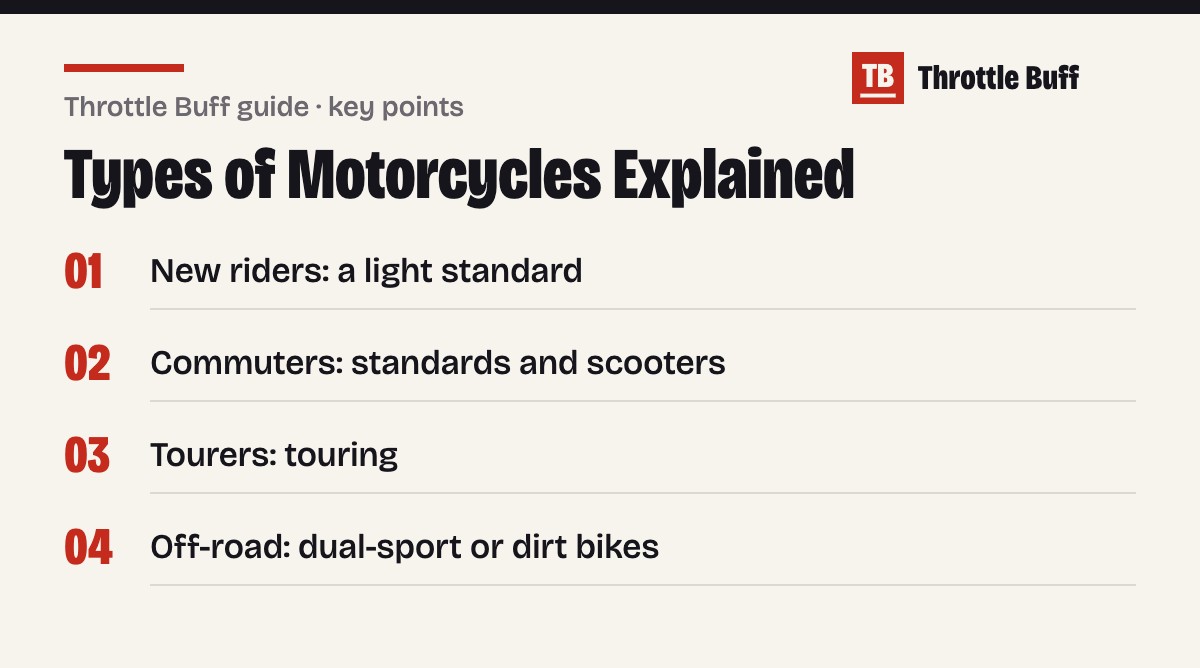
- Where will you ride? City streets suit nakeds and scooters; long highways suit touring and sport-touring bikes; gravel roads need an adventure or dual-sport.
- Your height: seat heights vary a lot. Tall riders should see best motorcycles for tall riders.
- Experience: a light standard or small cruiser is easiest to learn on.
- Handling: compare wheelbase on spec sheets: short bikes steer quickly, long ones feel stable. See how to measure wheelbase and what typical figures look like.
- Passenger: touring bikes and cruisers carry two people most comfortably.
Each type has matching gear, too: dirt bikes need MX helmets and boots, and touring riders benefit from an intercom. See types of motorcycle helmets and motorcycle brands.
Retro step-through scooters are a category of their own, and our roundup of Vespa alternatives compares the US options by engine size and price. If you’re weighing a 49cc moped against a small bike, see our moped vs motorcycle comparison for licensing, insurance and highway rules.
FAQ
What type of motorcycle is best for beginners?
A light, low-powered standard, cruiser or dual-sport.
What is a naked bike?
A standard motorcycle with little or no fairing.
What’s the difference between adventure and dual-sport?
Adventure bikes are bigger and built for long trips; dual-sports are lighter and better off-road.
Related reading: how motorcycle gear indicators work.
The bottom line
Choose the type that fits how and where you ride, then pick a model that’s comfortable and manageable.
Browse all our how-to and safety guides.
Thanks for sharing this neat web page.