Throttle Buff is reader-supported: we may earn a commission when you buy through links on this page. Read our affiliate disclosure.
To break in a leather motorcycle jacket, wear it: on short rides, around the house in a riding crouch, and with a thin layer underneath now and then. The leather softens and shapes itself to the way you sit on the bike. Add a thin coat of conditioner only if it feels dry, and keep heat, soaking, solvents and the washing machine away from it, because those are the shortcuts that ruin leather.
Leather riding jackets are thicker and stiffer than fashion jackets because they are built to slide on asphalt, so they take longer to soften. Retailers that sell them commonly quote two to four weeks of regular wear for cowhide, and less for thinner leathers. The care rules below come from REV’IT!’s leather care guide and Dainese’s leather jacket cleaning advice; your jacket’s own care label comes first.
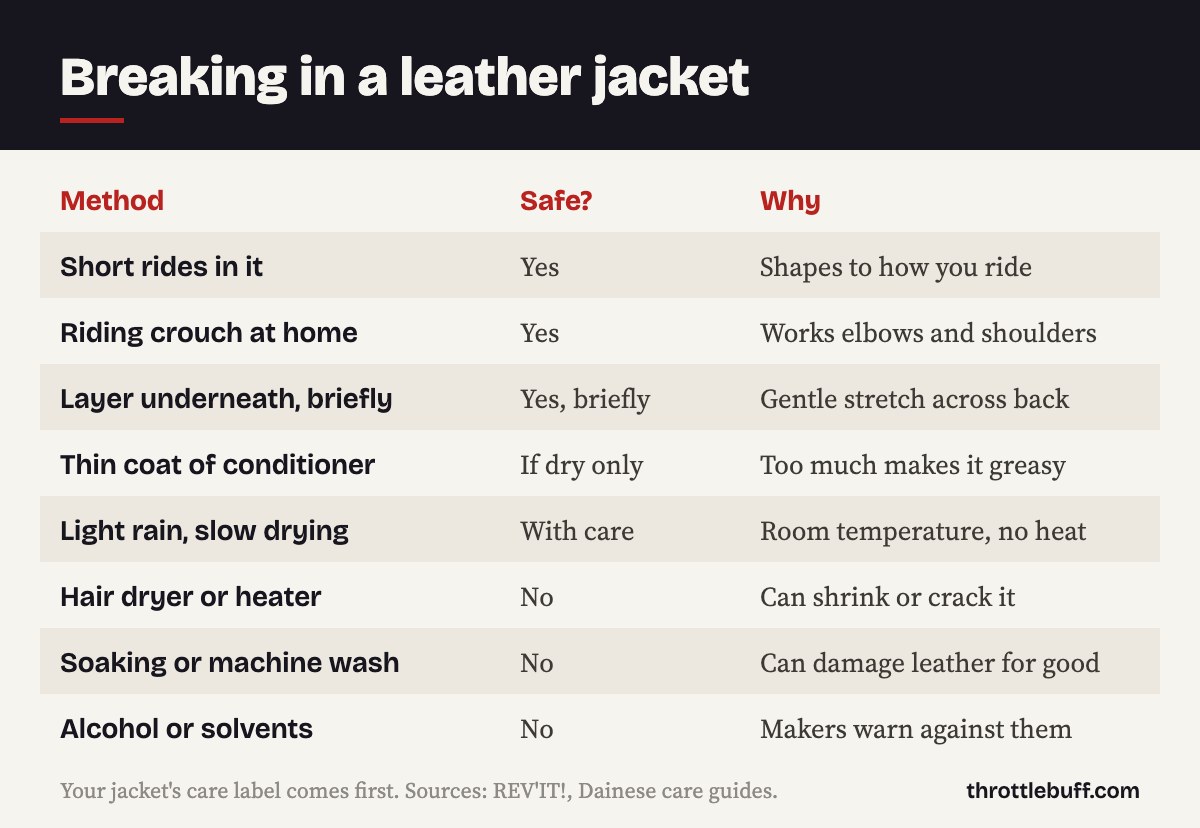
Break-in methods: what works and what to skip
| Method | Safe? | Why |
|---|---|---|
| Wear it on short rides | Yes | The leather shapes to your riding position, not your standing one |
| Wear it at home in a riding crouch | Yes | Arms forward and shoulders rounded work the elbows and back |
| Layer a hoodie underneath for short spells | Yes, briefly | Gentle stretch across the shoulders and back |
| A thin coat of leather conditioner | Only if the leather feels dry | Test inside first; too much leaves it greasy and floppy |
| A light shower, then slow drying | With care | Dry at room temperature, away from heat and sun |
| Hair dryer, tumble dryer or heater | No | Heat dries out the oils and can shrink or crack leather |
| Soaking or machine washing | No | Makers warn it can damage the leather for good |
| Rubbing alcohol or solvents | No | REV’IT! warns against alcohol-based sprays and solvents |
How to break in a leather motorcycle jacket, step by step
1. Check the fit before you start
Break-in softens leather; it does not fix the wrong size. A riding jacket should feel snug when you stand, with the sleeves a little long so they still reach your wrists with your arms on the bars. The elbow and shoulder armor should sit on the joint. If it is too tight across the chest or too short in the sleeve, exchange it now, while it is unworn. Our best leather motorcycle jackets guide covers fit and armor in more detail.
2. Ride in it, little and often
Riding is the best break-in there is. Your arms reach forward, your shoulders round and your back stretches, and the leather learns that shape. Short, frequent rides do more than one long one, because the jacket flexes the same way each time without you getting sore.
3. Wear it around the house in a riding crouch
When you cannot ride, wear it at home for an hour or two. Sit on a chair with your arms out as if holding the bars, reach forward, cross your arms, and roll your shoulders. Arm circles work the shoulders and elbows, the stiffest parts of most riding jackets.
4. Add a layer underneath for short spells
A hoodie or thick sweater under the jacket for 30 to 60 minutes gives the leather a gentle stretch across the back and shoulders. Do not leave it stretched for days, and do not do this with a jacket that already fits close. Our guide to what to wear under motorcycle gear covers the layers you will actually ride in, which is the fit that matters.
5. Condition only if it needs it
New leather usually has enough oil in it. If the surface looks dry or feels tight, rub a small amount of conditioner into a hidden spot inside the jacket first, then apply a thin, even coat to the outside and let it soak in. REV’IT! recommends conditioning lightly and testing first. Too much conditioner makes the leather greasy and can darken it, and overly soft leather is not what you want in a slide.
6. Let light rain help, then dry it slowly
Getting caught in a light shower is fine and helps the leather shape itself. The danger is the drying. Hang the jacket on a wide hanger at room temperature, away from heaters and direct sun, as REV’IT! and Dainese both advise, and let it dry for as long as it takes. Condition only once it is fully dry. For heavy rain, wear a rain shell over it; our guide to riding a motorcycle in rain covers the rest.
7. Store it on a wide hanger
Between rides, hang it on a broad, padded hanger so the shoulders keep their shape, somewhere cool and dry. Avoid plastic garment bags, which trap moisture.
How long does it take to break in a leather motorcycle jacket?
There is no official figure, and it depends on the leather. Thick cowhide, the most common riding leather, takes the longest; retailers usually quote a few weeks of regular wear. Thinner and naturally softer hides break in faster. If our textile vs mesh vs leather guide steered you to leather for abrasion resistance, expect the trade-off: the thicker the leather, the longer the break-in.
Break-in mistakes that ruin leather
- Heat. Hair dryers, tumble dryers and radiators dry out the leather’s oils. It can shrink, stiffen and crack.
- Soaking or machine washing. Dainese warns that a washing machine can damage a leather jacket permanently, and REV’IT! says not to machine wash, bleach or solvent clean its garments.
- Alcohol and petroleum jelly tricks. REV’IT! warns against alcohol-based sprays, and greasy home remedies can stain the leather and the lining.
- Removing the armor to soften it. The armor is the point of a riding jacket. Leave it in and let the leather soften around it.
- Waterproofing sprays straight away. If you want to treat the leather, do it after the break-in, with a product made for leather; our guide on how to waterproof a motorcycle jacket explains how.
The same rules apply to your boots. Our guide on how to break in motorcycle boots covers them.

FAQ
Do leather motorcycle jackets soften over time?
Yes. With regular wear the leather softens and shapes to you, especially at the elbows, shoulders and back. A jacket that never gets worn stays stiff.
How do you soften a stiff leather motorcycle jacket fast?
Wear it as much as you can, ride in it, and move in a riding crouch at home. A thin coat of conditioner helps only if the leather is dry. There is no safe fast shortcut with heat or water.
Should you condition a new leather motorcycle jacket?
Only if it feels dry. New leather is usually well oiled. Test any conditioner inside the jacket first and apply a thin coat.
Can I put my leather motorcycle jacket in the dryer to soften it?
No. Heat dries the leather out and can shrink or crack it. Dry and store it at room temperature.
Should a leather motorcycle jacket be tight?
Snug, so the armor stays on your elbows and shoulders, but you should be able to reach the bars and breathe freely. It will loosen slightly as it breaks in.
Verdict
The best way to break in a leather motorcycle jacket is to wear it, mostly on the bike. Add short spells with a layer underneath, condition lightly only when the leather is dry, and keep heat, soaking and solvents away from it. Give thick cowhide a few weeks and it will fit the way you ride. Still choosing one? Start with our best motorcycle jackets guide.
Browse all our riding gear guides.