Throttle Buff is reader-supported: we may earn a commission when you buy through links on this page. Read our affiliate disclosure.
To start a motorcycle club, find a few committed riders, agree on the club’s purpose, choose an original name and colors that don’t clash with existing clubs, write simple bylaws, then make it official with a bank account, insurance for events and, if you like, an AMA charter. Most new clubs are riding clubs: groups of friends who ride together, not traditional patch-holding motorcycle clubs. Here’s how to set one up the right way.
Riding club vs motorcycle club
A riding club is a social group built around riding: weekend rides, charity runs, brand meetups. Anyone who fits the theme can usually join. A traditional motorcycle club (MC) has a formal structure, prospect periods and patches, and in many areas there are long-standing customs about who can wear certain colors. For most riders starting something new, a riding club is the right model. It’s simpler, friendlier and avoids conflicts.
How to start a motorcycle club in 7 steps
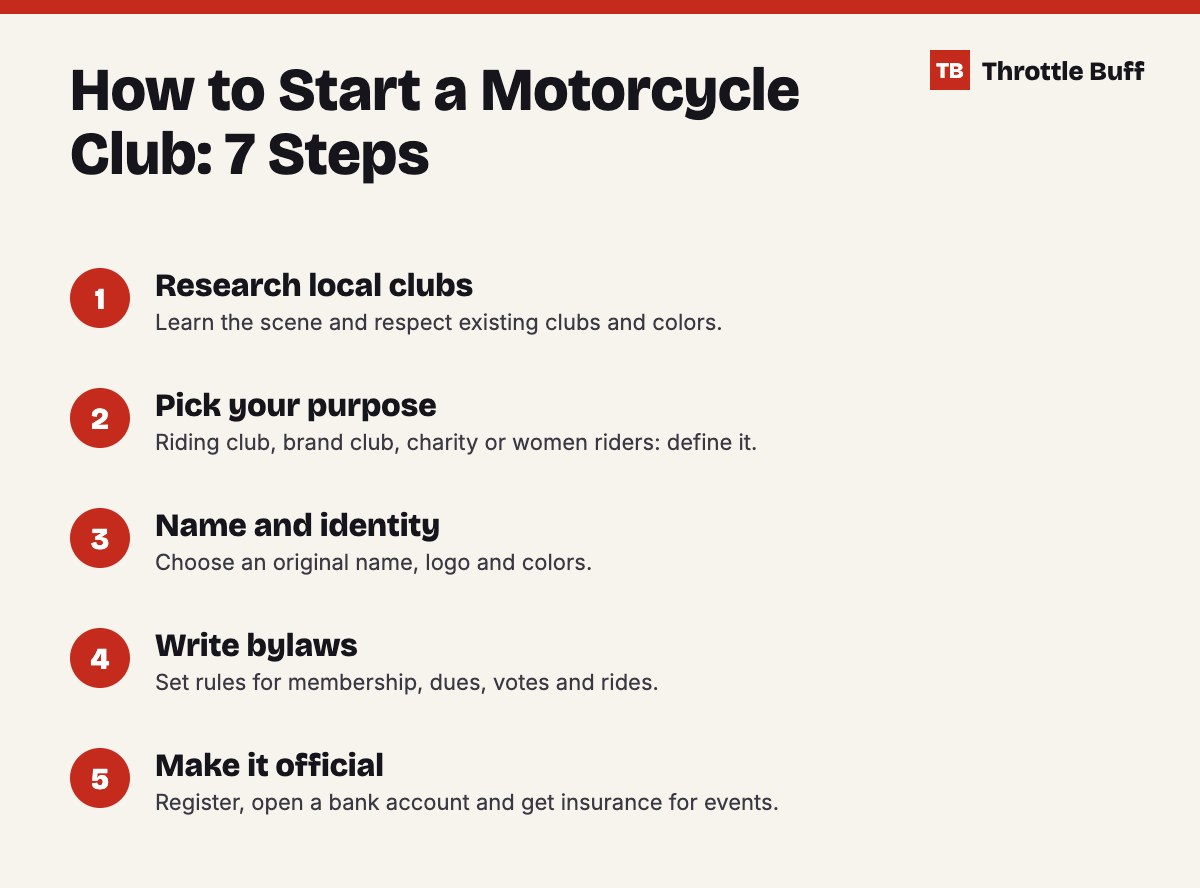
1. Research the local scene
Find out which clubs already ride in your area. Talk to riders at bike nights, dealerships and events. If traditional MCs are active nearby, learn the local etiquette before you design patches or use words like “MC”. Respect goes a long way.
2. Define your purpose
Decide what makes your club different. Common themes include:
- A brand or model (Harley touring riders, adventure bikes, sportbikes)
- A type of riding (day rides, touring, track days)
- A community (women riders, veterans, new riders)
- A cause (charity rides and fundraising)
3. Recruit a core group
Start with three to five reliable riders who share the vision. They’ll help with rides, admin and spreading the word. A small committed group beats a big uninterested one.
4. Choose a name, logo and colors
Pick an original name and check it isn’t used by another club. Keep the logo simple so it works on stickers, shirts and social media. Avoid three-piece patches and colors used by established MCs unless you understand the local rules.
5. Write bylaws
Bylaws don’t need to be long. Cover membership requirements, dues, how officers are chosen, how decisions are made, ride rules (group riding formation, minimum gear) and how members can be removed. Clear rules prevent arguments later.
6. Make it official
- Bank account: keep club money separate from personal funds.
- Legal structure: some clubs register as a nonprofit association; see the IRS guidance on tax-exempt status if you plan to fundraise.
- Insurance: event liability cover is wise if you host public rides.
- AMA charter: the American Motorcyclist Association offers club chartering, and chartered clubs are listed on the AMA website.
7. Plan your first rides and grow
Host an easy first ride with a coffee or lunch stop. Post photos, create a simple social page and invite riders you meet. Consistency matters more than size: a regular monthly ride builds a club faster than one big event.
Running group rides safely
Set expectations before every ride: route, stops, fuel range and hand signals. Use a lead and sweep rider, ride in a staggered formation and never pressure anyone to ride beyond their ability. Encourage proper gear; our beginner gear guide is a good reference for new members. The Motorcycle Safety Foundation offers courses that suit club members of all levels.
Intercoms make group rides much easier and safer. A Mesh system lets everyone talk without stopping; see our best intercoms and Cardo vs Sena guides.
Key club roles
- President: sets direction, runs meetings and represents the club at events.
- Vice president: backs up the president and often handles member issues.
- Treasurer: manages dues, the bank account and the yearly budget.
- Secretary: keeps records, minutes and the member list.
- Road captain: plans routes, leads rides and briefs the group on safety.
Small clubs can combine roles, but give each job to a named person so nothing falls through the cracks. Rotate roles each year if members want a turn.
Membership and dues
Keep dues low and transparent. Typical uses include patches, stickers, insurance, event costs and charity donations. Publish a simple yearly budget so members know where money goes.
Ideas for club activities
- Monthly day rides and overnight trips (see our touring checklist)
- Charity runs and toy drives
- Garage days for basic maintenance
- Skills sessions for newer riders, covering topics like common beginner mistakes
- Bike nights and dealership meetups

FAQ
How many members do you need to start a motorcycle club?
There’s no legal minimum. Three to five committed riders is a practical start.
Do I need permission to start a motorcycle club?
No permission is required for a riding club. In areas with traditional MCs, it’s wise and respectful to learn local customs before wearing patches.
Should my club register as a nonprofit?
It’s optional. Registering can help if you raise money for charity or want to protect members from personal liability; get local legal advice.
What does an AMA charter give my club?
AMA chartering lists your club on the AMA website and connects you with its organizer resources. Check the AMA’s charter forms for current requirements.
How do I attract new members?
Run regular, welcoming rides, post photos online and invite riders you meet at bike nights and dealers.
Conclusion
Starting a motorcycle club is mostly about people: a shared purpose, simple rules and regular rides. Do your homework on the local scene, keep things organized and safe, and the club will grow on its own. Ride safe and have fun building it.
Browse all our how-to and safety guides.